I have spent the last few days completely glued to the live NASA updates, and I am still struggling to wrap my head around the sheer scale of what we are witnessing right now. It is incredibly rare to wake up and realize you are living through a definitive moment in human history, but that is exactly what the Artemis 2 crew has delivered this week.
For the first time since 1972, human beings have traveled beyond the immediate orbit of the Moon. But they didn’t just go back; they pushed further into the dark void of space than our species has ever gone before.
As I write this, the Integrity capsule is speeding back toward a planned splashdown off the coast of San Diego in just two days. Before they return to solid ground, I need to break down exactly what this crew just accomplished, the breathtaking phenomena they witnessed, and why this mission completely changes the trajectory of our future in space.
Smashing a 56-Year-Old Record
Since 1970, the Apollo 13 mission held a bittersweet record. Due to their emergency trajectory, that crew swung further away from Earth than any humans in history—400,171 kilometers, to be exact. It was a record born out of a near-tragedy.
On the morning of April 6, the Artemis 2 crew—Reid Wiseman, Victor Glover, Christina Koch, and Jeremy Hansen—rewrote that history book on purpose. Driving the Orion capsule, named Integrity, they reached an astounding distance of 406,771 kilometers from Earth.
Listening to the audio feeds from the capsule gave me goosebumps. Commander Reid Wiseman perfectly captured the overwhelming nature of the view, stating, “No matter how long we look, our brains cannot process the image in front of us. It is absolutely magnificent, surreal.” It really makes you think about the psychological limits of the human mind. How do you process seeing the entirety of your home planet as a tiny, fragile marble floating in absolute nothingness?
Human Eyes on the Far Side of the Moon
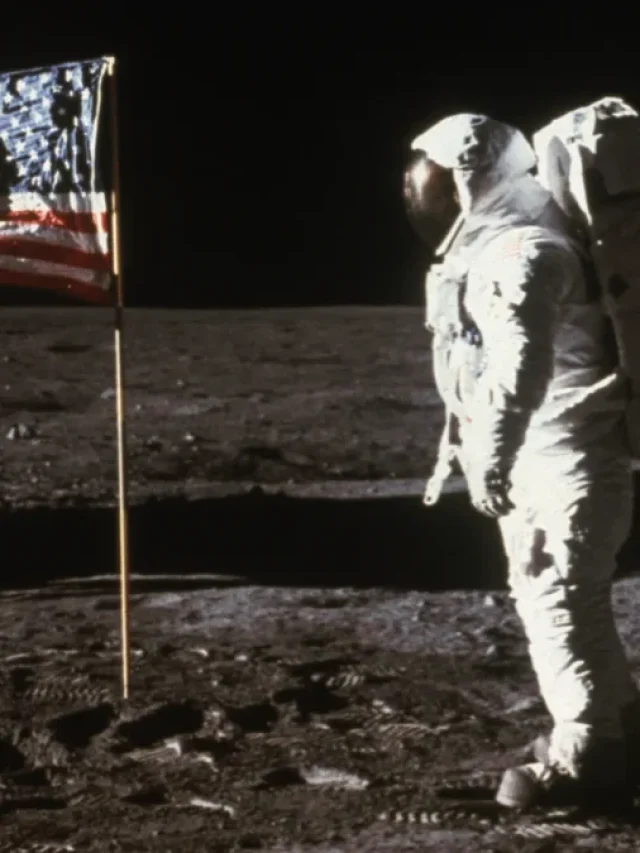
One of the most critical aspects of this mission was the close flyby of the Moon’s far side—a region that has never been observed directly by human eyes until now. The Integrity capsule skimmed the lunar surface from a distance of just 6,545 kilometers.
You might be asking, “Don’t we already have satellites mapping the Moon?” Yes, we do. But there is a massive difference between robotic sensors and the human optic nerve.
The Power of Human Perception: Human eyes can detect subtle variations in color, depth, and texture that robotic camera lenses often miss or misinterpret.The Orientale Basin: The crew used 32 different camera systems, alongside their own direct observations, to map previously unseen territories like the massive 965-kilometer-wide Orientale Basin.Lunar “Snow”: The astronauts reported that the three concentric mountain rings surrounding the basin looked as though they were dusted in snow or fine, bright powder.
This isn’t just space tourism. The visual data and geological mapping the crew performed during this flyby will be the literal roadmap for where we build future lunar bases.
The 53-Minute Eclipse: Basking in “Earthshine”

For me, the absolute highlight of this mission—the moment that sounded like pure science fiction—was the solar eclipse they experienced while flying behind the Moon.
Because of their unique vantage point and trajectory, the crew witnessed a total solar eclipse that lasted for an incredible 53 minutes. Back on Earth, we are lucky if an eclipse lasts a few minutes.
But it gets even crazier. During this hour of darkness, the Moon wasn’t just pitch black. It was illuminated by “Earthshine”—the sunlight reflecting off the oceans and clouds of Earth, bouncing across the void, and softly lighting up the lunar surface.
Victor Glover’s description of this event is something I’ll never forget. He described the sun dipping behind the Moon, leaving only a brilliant halo of the solar corona visible. Behind them, the Earth was blazing bright, casting a ghostly glow on the dark sphere of the Moon hanging right in front of their window. They gathered data on the sun’s corona during this event that scientists back home will be analyzing for years.
An Emotional Tribute in the Void

Space exploration is a triumph of cold, hard mathematics and engineering, but it is ultimately driven by the human heart.
During the mission, the capsule intentionally lost communication with Earth for about 40 minutes as they passed behind the Moon. It was a planned blackout, but I can’t imagine the isolation they must have felt in that silence.
When they re-emerged, they didn’t just read out telemetry data. The crew officially requested to name a newly observed lunar crater. They proposed two names: Integrity, after their capsule, and Carroll, in honor of Commander Wiseman’s late wife, who passed away from cancer in 2020.
Mission Control immediately approved the request. Seeing the video feed of the entire crew tearing up and embracing each other in zero gravity was a powerful reminder that we don’t leave our humanity behind when we leave the atmosphere; we bring it with us to the stars.
The Road Ahead: What Happens Next?
Right now, the crew is bracing for their fiery reentry. If everything goes according to plan, they will splash down in the Pacific Ocean on April 10. But the end of Artemis 2 is just the starting gun for the real challenge.
Here is the timeline we are looking at next:
Artemis 3 (Targeted 2027): This will be the critical test for orbital rendezvous and docking procedures, essentially practicing the maneuvers needed to land.Artemis 4 (Targeted Late 2028): This is the big one. If all goes well, this mission will finally put human boots back on the lunar dust, specifically near the Moon’s resource-rich South Pole.
Watching this mission unfold has honestly reignited my passion for space exploration. We aren’t just reading about history anymore; we are watching it stream live in 4K.
I’d love to hear your perspective on this. If you were offered a seat on the Orion capsule, knowing you would have to endure the 40-minute total communication blackout on the dark side of the Moon, would you take the trip? Let me know in the comments!