One night in London in 1967, Nicholas Logsdail missed his train home and ended up sleeping on a bench in Marylebone station.
When he woke up, Logsdail “wandered around and saw an ad in a pub window in Bell Street for somewhere that needed doing up” in Lisson Grove. Logsdail, a student at the Slade at the time, had been looking for somewhere to show his fellow student’s work and that doer-upper ended up becoming the Lisson Gallery. “I spent so much effort putting on that first show that I was expelled from art school,” he says. “Derek Jarman said I had better stick to the gallery business then!”.
In the decades since, the surrounding area has become unrecognisable, Logsdail says, “from fashionable Chiltern Street to the south and the next-door skyscrapers of Paddington Basin, but our little patch off Edgware Road remains relatively untouched,” with studios, galleries and creative businesses giving the district a unique feel.
This has contributed to Lisson Grove becoming a gallery destination “almost despite its best efforts,” says Andrew Renton, the professor of curating at Goldsmiths, University of London, who lives locally and is a trustee of The Showroom, a not-for-profit gallery just off the Edgware Road.
Ângela Ferreira’s Slits are Girls installation at The Showroom
Photo: Cesare De Giglio
Renton describes Lisson Grove as the “last part of central London to be gentrified—an act of resistance, I think” and thinks that lack of gentrification may have given Lisson Gallery “a conceptual freedom to operate here in a way that might not have been possible a mile or two down the road in the West End”.
Lisson Gallery and The Showroom have now joined forces with the artist-led charity The Bomb Factory Art Foundation, and the commercial galleries Patrick Heide Contemporary Art and Palmer Gallery to form the Lisson Grove Galleries initiative, with the aim of promoting the area’s artistic activity. The collaboration will launch officially during London Gallery Weekend (LGW, 5-7 June) with a series of talks and events on Friday 5 June. The initiative will then run events such as artist talks, breakfast tours, late openings and BBQs throughout the year.
The LGW events on 5 June will begin at 12pm at The Bomb Factory Art Foundation with a talk about the exhibition Collectivism, which brings together artist collectives, before moving to The Showroom for a 1pm tour of Mandy El-Sayegh’s mural This is a Sign: Notes on Assembly with the director Gabriela Salgado and Renton’s introduction to Slits are Girls by Ângela Ferreira. At 2pm, Carolina Aguirre will give a musical/spoken word performance at Palmer Gallery, followed by Lubaina Himid and Magda Stawarska in conversation with Rosie Cooper, the director of Wysing Arts Centre, at Lisson at 3pm, finishing with private view of Thomas Müller’s exhibition Metaxy and BBQ at Patrick Heide Contemporary Art from 5-9pm.
Renton—who has recently become “obsessed” with how Lisson Grove was “ground zero for punk in the 1970s”—recalls how The Showroom moved to the area from East London in 2009: “As an organisation it asked itself where—in which community—it could prove most effective.” Salgado says the local Church Street Ward encompasses “the needs and interests of an eclectic community of local people with roots in the UK and beyond”, an environment that has fostered “a cluster of remarkable cultural institutions”.
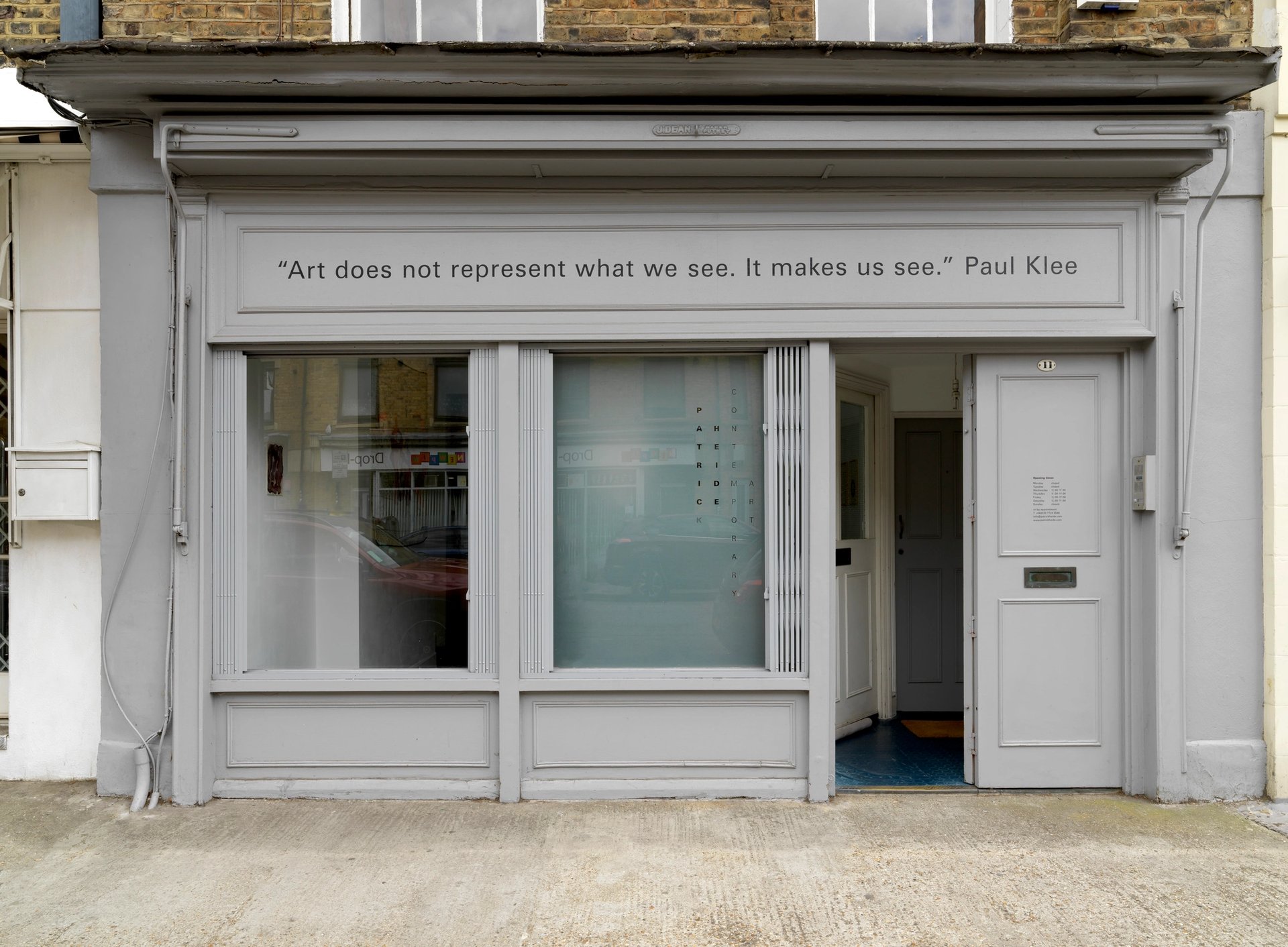
Patrick Heide Contemporary Art on Church Street
Courtesy of the gallery
Lucas Palmer and Will Hainsworth, who co-founded the Palmer Gallery in the former 1920s Palmer Tyre Company factory on Lisson Grove in 2024, both grew up in the area, which Palmer describes as “raw and unrefined”, a “higgledy-piggledy mix of people” from different backgrounds. The numerous galleries sit alongside artist studios, the Cockpit Theatre, and the characterful Alfie’s Antiques Market—opened by Bennie Gray in an old department store on Church Street in 1976.
“We’ve always seen that there is amazing cultural activity here—in terms of galleries, food and markets—but little awareness of this outside our local community,” says Palmer of the new initiative. “As a collection of local galleries and cultural institutions, we wanted to celebrate the area, anchor our cultural offering in a more collaborative way, and ultimately encourage people to come and explore everything Lisson Grove has to offer.”