Amazon founder Jeff Bezos believes the Moon should become humanity’s first permanent home beyond Earth. According to Bezos, building settlements on the Moon and moving heavy industry into space could be essential for protecting our planet in the long run.
In recent years, the space race has moved beyond simply reaching the Moon or Mars. The new goal is to establish permanent bases, and eventually colonies, beyond Earth. Both the United States and China are taking major steps toward building long-term outposts on the Moon and Mars. Meanwhile, figures such as Elon Musk continue to promote the idea of making humanity a multi-planetary species through a future colony on Mars.
Jeff Bezos also believes that humanity’s long-term future depends on building a permanent presence in space. However, unlike Musk, Bezos argues that the answer is not Mars, but the Moon.
Jeff Bezos: Humanity Must Move Heavy Industry Into Space
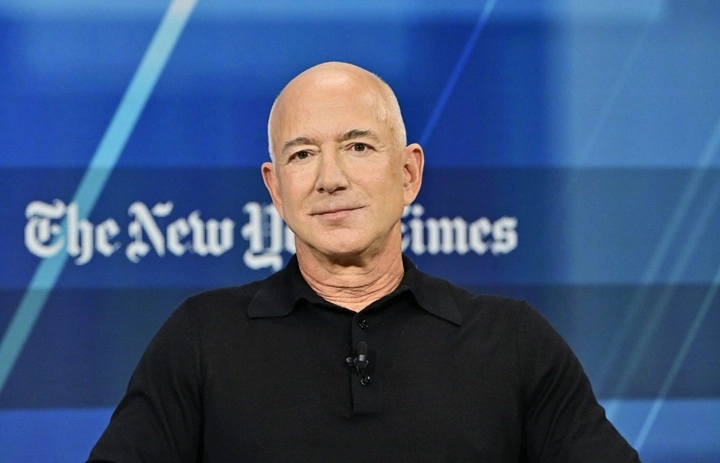
Speaking at VivaTech 2026 in Paris, Jeff Bezos said humanity will eventually need to move heavy industry away from Earth. Appearing on stage with Blue Origin CEO Dave Limp, Bezos argued that the only way to keep economic growth going while preserving Earth as a livable planet is to relocate energy-intensive and environmentally damaging industrial activities into space.
According to Bezos, this shift could allow Earth to gradually return to a state closer to its pre-industrial natural balance. In his view, Earth should be protected as humanity’s home, while the most resource-heavy parts of industry should be moved beyond the planet.
Why Bezos Thinks the Moon Should Come Before Mars
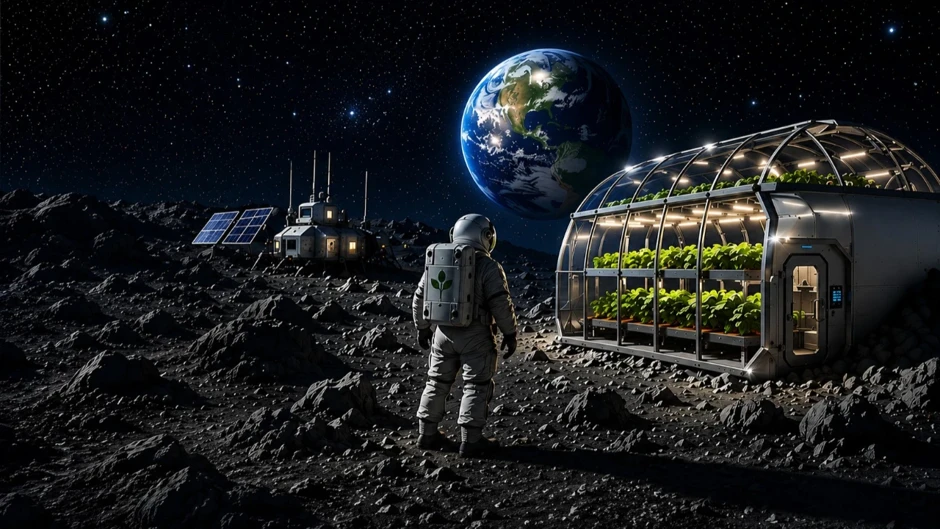
For Bezos, the starting point of this transformation should be the Moon, not Mars. One of the biggest advantages of the Moon is its distance from Earth. It is only about three and a half days away, making it far more accessible than Mars.
Mars missions depend on launch windows that open roughly every two years. The Moon, by contrast, can be reached at almost any time of the year. This makes it a much more practical location for building the first major off-world infrastructure.
The Moon’s low gravity is another major advantage. Bezos noted that lifting materials from the lunar surface requires far less energy than launching the same materials from Earth. According to the figures he shared, sending cargo from the Moon into space requires around 28 times less energy per kilogram compared with launching it from Earth.
Lunar Resources Could Support a Space Economy
The Moon’s natural resources are also central to Bezos’ vision. Scientists have long believed that water ice exists in the Moon’s polar regions. If that ice can be extracted and processed, it could be turned into liquid oxygen and hydrogen, both of which are key components of rocket fuel.
This would make it possible to produce fuel directly on the Moon instead of constantly transporting it from Earth. Such a system could significantly reduce the cost and complexity of future space missions.
The lunar surface also contains a wide range of minerals, shaped over billions of years by meteor impacts. These materials could one day be used to build space stations, energy systems, transportation infrastructure, and other structures beyond Earth.
Bezos Sees the Moon as Humanity’s First Permanent Space Base
Although Bezos did not directly mention Elon Musk, his comments appear to challenge the Mars-first approach often associated with SpaceX. Bezos believes that humanity should not skip important stages in space development. In his view, the Moon should not be treated as a temporary stop on the way to Mars, but as humanity’s first permanent base in space.
Interestingly, SpaceX has also begun showing more interest in the Moon in recent months. Elon Musk recently said that the company aims to build a self-sustaining city on the Moon within the next decade. This marks a notable shift for a company that has long been associated mainly with Mars colonization.
Millions of People Could One Day Live in Orbital Habitats
Bezos’ broader vision goes far beyond the Moon. He believes that one day, millions of people could live in large orbital habitats. These structures could host communities, industries, and advanced energy systems outside Earth.
He has also suggested that solar power could be generated in space and transmitted back to Earth. In addition, some advanced technologies, including high-end chip manufacturing, could eventually benefit from the unique conditions of space.
Bezos does not exclude Mars from humanity’s future. However, he argues that before moving toward Mars, humanity should first build a strong economic and technological foundation on the Moon.
The Moon Could Become the Center of a New Space Economy
Many of these ideas still seem distant today. However, recent developments in the space industry suggest that the Moon is once again becoming a major arena for global competition.
This time, the goal is not simply to plant a flag. The next stage of lunar exploration could involve energy production, mining, fuel generation, manufacturing, and the creation of an entirely new economic ecosystem beyond Earth.
Whether Bezos’ full vision becomes reality remains to be seen. But the idea that the Moon will play a central role in humanity’s future in space is gaining more attention every year.