Ethereum turned 11 on July 30, the anniversary of the day users generated and loaded the Frontier genesis block in 2015.
In its first decade, the network survived the DAO crisis, executed the Merge to proof-of-stake, and became the leading public venue for stablecoins, decentralized finance, and tokenized assets.
Its second decade brings a harder set of tests. Ethereum currently hosts about $148.8 billion in stablecoins and roughly $15.5 billion in tokenized real-world assets, according to the latest data from DeFiLlama and RWA.xyz.
Ethereum-based applications generated about $8.56 million in 24-hour fees at the time checked, DeFiLlama data show. The base chain itself generated roughly $734,000 in fees and $330,000 in revenue over the same window.
Ethereum’s scale metricLatest figure citedWhat it showsThe unresolved questionStablecoins on Ethereum$148.8BEthereum remains the dominant settlement layer for tokenized dollarsDoes stablecoin growth create sustained ETH demand?Tokenized RWAs on Ethereum$15.5BInstitutions already use Ethereum for real-world assetsDo institutions need ETH, or just Ethereum rails?Ethereum app fees, 24h$8.56MApplications capture meaningful economic activityHow much value stays at the app layer?Base-chain fees, 24h$734KProtocol-level fee capture is much smallerCan low fees still support ETH value accrual?Base-chain revenue, 24h$330KETH burn/revenue remains modest versus hosted valueDoes the “ultrasound money” thesis need a new engine?
Can ETH capture Ethereum’s growth?
A June 2026 academic study found that the median transaction fee on the Ethereum mainnet fell from more than $2 to less than $0.02 between 2024 and early 2026, and the median layer-2 fee fell by more than 95% over the same period.
Cheaper transactions made Ethereum more useful, and they cut into the fee burn that once anchored the “ultrasound money” thesis for ETH.
Vitalik Buterin has already conceded the problem directly, writing that Ethereum must ensure ETH “continues to accrue value even in an L2-heavy world.”
His proposed paths run through four channels: ETH as the primary collateral and monetary asset across the network, rollups that return part of their economics to ETH, support for based rollups, and more meaningful demand for blob space.
He has also cautioned against relying on any single one of those mechanisms to solve the problem.
Joseph Lubin argued that Ethereum should keep base-layer fees low to drive adoption. ETH would then accrue value through its monetary premium, staking demand, and the amount of ETH locked across the network.
Etherealize’s Vivek Raman goes further, pitching ETH as “productive money”: a store-of-value asset that can also earn yield and serve as collateral.
The value-capture thesis becomes credible only if ETH turns into the preferred collateral across both layers. Rollup activity would also need to start producing real blob demand and settlement fees for the base chain.
Whether ETH becomes more valuable as applications do is the open question for the next few years.
What a layer-2 network guarantees
Ethereum spent years describing rollups as extensions of one unified network, cheaper execution environments that inherited its security like shards of the same system.
Buterin said in February that the original vision “no longer makes sense” in its old form, citing a fast EVM chain that connects to Ethereum through nothing more than a multisig bridge, which falls short of genuinely scaling Ethereum.
The distinction carries real weight because users hear that assets on Base, Arbitrum, Optimism, Starknet, and other networks stay inside “Ethereum.” Those systems can run different sequencers, bridges, upgrade keys, security councils, proof systems and withdrawal mechanisms.
Rollup / L2 featureWhat users may assumeWhat actually variesWhy it mattersSequencerTransactions are ordered neutrallySequencers can be centralized or decentralizedAffects censorship and transaction-ordering riskBridgeAssets are secured by EthereumBridges may rely on multisigs, proofs or security councilsDetermines whether users inherit Ethereum-level securityUpgrade keysCode rules are finalAdmins may retain upgrade authorityCreates governance and intervention riskProof systemInvalid state transitions cannot finalizeSome systems still rely on training wheelsAffects trust minimizationWithdrawal processUsers can always exit safelyExit times and fallback mechanisms differMatters during outages or governance disputesL2BEAT stage“Ethereum L2” means the same thing everywhereStage 0, 1, and 2 carry different guaranteesShows whether a network is mature or still operator-dependent
L2BEAT’s stage framework makes the gap visible. Stage 0 networks stay largely operator-controlled, Stage 1 networks keep limited training wheels, and only Stage 2 networks run principally on code. Several prominent rollups still sit at Stage 0 or Stage 1 today.
Ethereum must either make its rollups behave like one secure network or stop implying that every Ethereum-connected chain carries the same guarantees.
Who speaks for Ethereum now
The Ethereum Foundation cut 54 positions in June and reorganized around the protocol, access, user, community, and institutional layers. The stated goal was a smaller organization that focuses on work only a credibly neutral foundation can perform.
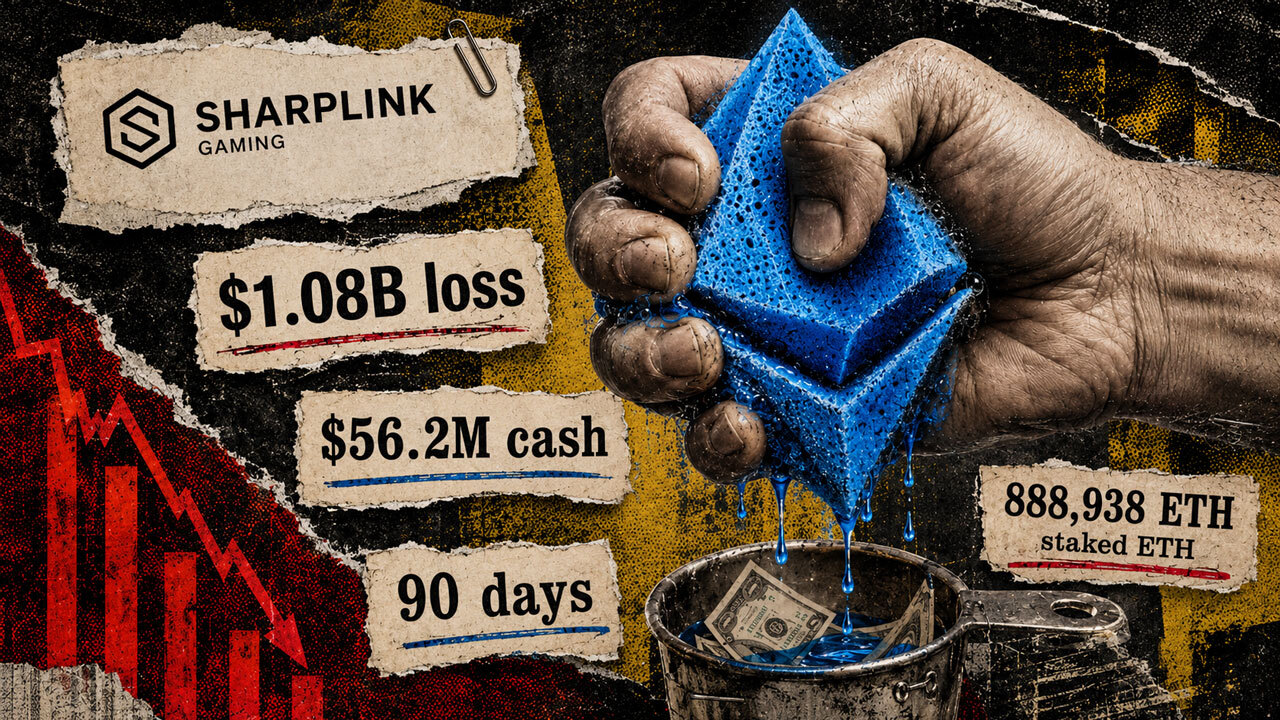
The Foundation once handled functions that are now moving elsewhere. BitMine, SharpLink, and Ethereum co-founder Joseph Lubin back both Ethlabs and Ethereum Institutional, two independent nonprofits that launched this year.
Former Foundation contributors formed Ethlabs to handle research, and Ethereum Institutional took shape separately as a front door for institutional finance.
That backing raises a governance concern about how much influence large ETH holders should have over the organizations now shaping Ethereum’s research and institutional strategy.
Multiple independent institutions reduce reliance on a single organization and allow specialists to pursue research, policy, or institutional sales on their own terms.
The risk is a federation in which accountability is hard to locate. Groups could duplicate work, compete for authority, chase incompatible roadmaps, or grow dependent on wealthy sponsors.
Any of that would make it hard to tell who speaks for Ethereum when technical, commercial, and ideological priorities pull apart.
The trillion-dollar security bar
Ethereum’s fourth test is to add capacity while preserving credible neutrality, censorship resistance, and independent verification.
The Foundation said in February that Ethereum’s gas limit had already risen from 30 million to 60 million, with work underway toward 100 million and beyond. Current priorities include higher execution capacity, more blob throughput, native zkEVM verification, enshrined proposer-builder separation, censorship resistance, and post-quantum security.
Higher throughput raises hardware and storage demands, and faster schedules raise execution risk. Specialized block builders can improve efficiency while concentrating transaction ordering in fewer hands.
A 2026 study noted that centralized block-building services constructed about 91% of Ethereum blocks.
At most 1.55% of proposers could plausibly be considered altruistic under the researchers’ criteria. The finding is an early signal about block-building incentives rather than a final verdict on the network.
The Foundation’s Trillion Dollar Security wants billions of people to be comfortable holding at least $1,000 on-chain, and institutions to eventually be comfortable placing $1 trillion inside a single application. Its work spans wallets, blind signing, smart contracts, cloud dependencies, and stake concentration.
Google Quantum AI’s March 2026 research lowered the estimated cost of breaking 256-bit elliptic-curve cryptography to roughly 1,200 logical qubits, about 20 times fewer than earlier estimates.
Ethereum’s current work already includes post-quantum account migration and native account abstraction, and the real scaling test is simple to state but hard to meet: grow capacity while keeping the trust assumptions where they are today.
In the bull case, ETH becomes the collateral and monetary asset underneath layer 1, layer 2s, tokenized assets, and staking all at once.
Climbing ETH collateral share, blob demand, staking demand, and layer-2 settlement fees would show Ethereum’s usage finally mapping onto ETH’s own value.
Test for Ethereum’s second decadeBull-case signalBear-case signalETH value captureETH becomes preferred collateral across L1, L2s, staking and tokenized assetsStablecoins, Treasurys and app tokens absorb growth while ETH stays optionalRollup cohesionMore L2 value reaches Stage 2 and cross-rollup use feels unifiedUsers remain split across bridges, sequencers and inconsistent guaranteesGovernance accountabilityEF, Ethlabs, Ethereum Institutional and client teams coordinate without central controlResponsibility fragments and wealthy sponsors gain outsized influenceSecurity and neutralityHigher throughput arrives with strong censorship resistance and independent verificationScaling increases hardware burden, MEV concentration or trust assumptionsInstitutional adoptionTokenized assets grow while Ethereum remains credibly neutralInstitutions push the stack toward controlled access and compliance-based censorshipPost-quantum readinessAccount migration and cryptographic upgrades progress before practical quantum riskLegacy keys and contracts remain exposed as quantum timelines compress
In the bear case, layer-2 networks, issuers, and applications capture most of the economic value, and ETH stays optional for the system sitting on top of it. Rollup revenue grows off-chain, and stablecoin and tokenized-asset users continue to hold dollars and Treasuries.
Ethereum’s next 11 years will test whether its scale can carry ETH, users, and the network’s neutrality forward together.