
I’ll admit, whenever I hear about human colonies on Mars, my mind immediately jumps to Matt Damon meticulously growing potatoes in The Martian. It always felt like pure Hollywood magic—a fun concept, but practically impossible. But while digging into a recent study from researchers in Germany, I was genuinely blown away. We are officially stepping out of the sci-fi realm and into real-world interplanetary agriculture.
Scientists have successfully figured out a way to take simulated Martian dust, introduce some incredibly tough microorganisms, and create actual, usable fertilizer to grow food. And the yield is staggering: just 1 gram of this bio-matter produced 27 grams of edible plants.
This isn’t just a fun laboratory trick; it is the fundamental key to surviving on the Red Planet. Let me break down exactly why this matters, how it works, and why it changes our entire approach to space exploration.
The Interplanetary Bottleneck: Why Mars Hates Farmers

If we want to build permanent bases on Mars, we have a massive logistical nightmare to solve: food.
Shipping supplies from Earth is absurdly expensive. Every single kilogram blasted into space costs thousands of dollars, and a trip to Mars takes months. If a colony is going to survive, it has to be self-sustaining. It needs a closed-loop system.
The problem is the Martian surface itself. Yes, the soil (or more accurately, the regolith) is rich in certain minerals, but it is entirely “dead.” It completely lacks the organic nutrients and biological ecosystems required to grow a simple tomato, let alone sustain a colony. Until now, most theoretical plans relied on dragging heavy fertilizers from Earth. But this new research proves we might just be able to use what Mars already gives us.
The Unsung Heroes: Cyanobacteria

At the heart of this breakthrough is a tiny, ancient survivor: cyanobacteria.
You might know them by their more common name, “blue-green algae.” On Earth, these microscopic powerhouses are famous for surviving in extreme, hostile environments. For a Mars mission, they are practically the perfect workforce. Here is why:
They eat what Mars has: The Martian atmosphere is roughly 95% carbon dioxide. Cyanobacteria thrive on CO2, using it to grow while simultaneously producing oxygen.They process the toxic dust: They can extract necessary minerals directly from the harsh Martian regolith, turning dead rock into living biomass.
To prove this could work, the research team didn’t use standard Earth dirt. They used a highly accurate Martian regolith simulant called MGS-1. They essentially recreated the dirt you’d find on Mars, pumped in carbon dioxide, and let the cyanobacteria go to work. The bacteria fed, multiplied, and created a rich biomass built entirely from simulated Martian resources.
Breaking It Down: The Anaerobic Fermentation Magic
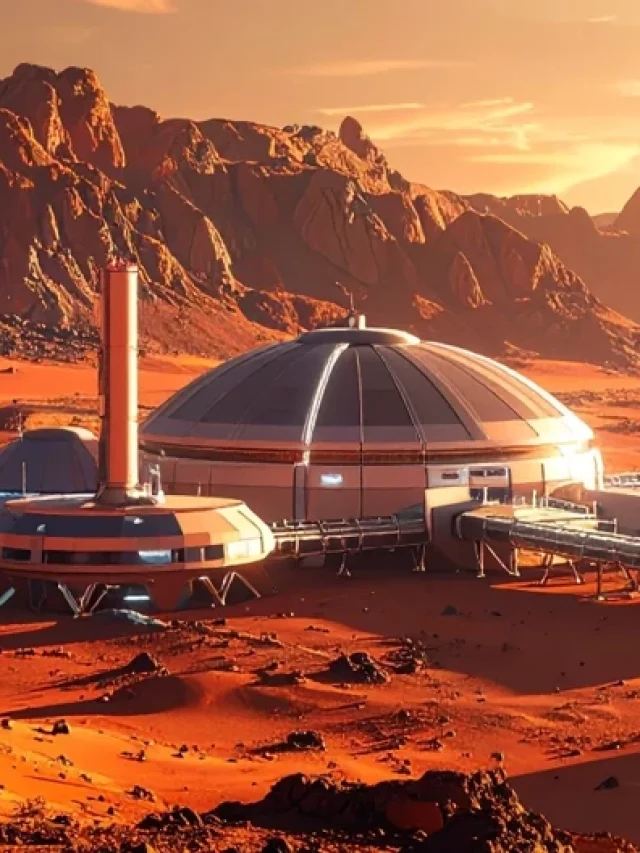
Now, you can’t just sprinkle cyanobacteria on some dirt, plant a seed, and expect a salad. The nutrients locked inside that bacterial biomass aren’t immediately available for plant roots to absorb.
This is where the process gets incredibly clever. The researchers introduced an anaerobic fermentation step.
The Oxygen-Free Cooker: By placing the cyanobacteria biomass in an oxygen-free environment, microorganisms begin to break down the organic matter.The Sweet Spot: I found it fascinating that researchers pinpointed the exact optimal condition for this: pre-heating the biomass and running the fermentation at roughly 35°C (95°F) yielded the absolute best results.The Output: This fermentation process effectively “digests” the bacteria, releasing a nutrient-dense liquid that is perfect for hydroponic farming.
The 27-to-1 Miracle
To test this newly forged, Mars-derived fertilizer, the team didn’t use potatoes. They used Lemna, commonly known as duckweed.
If you aren’t familiar with duckweed, it is an aquatic plant that grows incredibly fast and is absolutely packed with protein. It’s exactly the kind of highly efficient crop astronauts would rely on.
The results of the test were staggering. The researchers found that just 1 gram of dried cyanobacteria was enough to produce the nutrients required to grow 27 grams of edible duckweed. Let that sink in. That is a massive multiplier. It proves that a small-scale bioreactor on Mars could genuinely fuel a highly productive hydroponic farm.
A Hidden Bonus: Mars Fuel
As if growing food wasn’t enough, this system has a fantastic byproduct. During the anaerobic fermentation process, the microbes naturally produce methane gas. Methane is a potent fuel. This means the exact same system keeping the astronauts fed could simultaneously generate the energy required to keep the lights on and heat the base. Talk about a win-win.
Bringing It Back Home: What This Means for Earth

I always love it when space technology ends up solving problems right here at home. While the goal is to conquer the harsh environment of Mars, the applications for Earth are immediate.
Think about the regions of our own planet suffering from extreme droughts, nutrient-depleted soil, or creeping desertification. If we can engineer a way to grow protein-rich food using nothing but dead rock, carbon dioxide, and bacteria, we can absolutely use this technology to revolutionize sustainable agriculture in Earth’s most vulnerable climates.
The Road Ahead: Beating Mars’ True Harshness
As excited as I am about this, I have to keep my feet on the ground (pun intended). There are still massive hurdles to overcome.
This study was conducted in a highly controlled laboratory on Earth. Mars is a distinctly different beast. We still don’t fully know how the lower gravity (about 38% of Earth’s), the intense cosmic radiation, and the wild temperature swings of the Red Planet will impact these delicate biological processes.
The next step for the scientific community is to integrate this biological fertilizer system into broader, more complex life-support simulations. But make no mistake: this is a giant leap forward. A self-sustaining “Mars Garden” is no longer just a plot device for a sci-fi movie. It is an active, proven scientific possibility.
I don’t know about you, but the idea of humans eventually sitting down to a meal grown entirely from the dust of another planet gives me goosebumps. It shows just how resilient and innovative we can be when pushed to the absolute limits.
What do you think? If you were on the first colony ship to Mars, would you be comfortable eating a duckweed salad grown from fermented bacteria and alien dust, or would you be secretly hoarding vacuum-sealed snacks from Earth? Let me know in the comments!