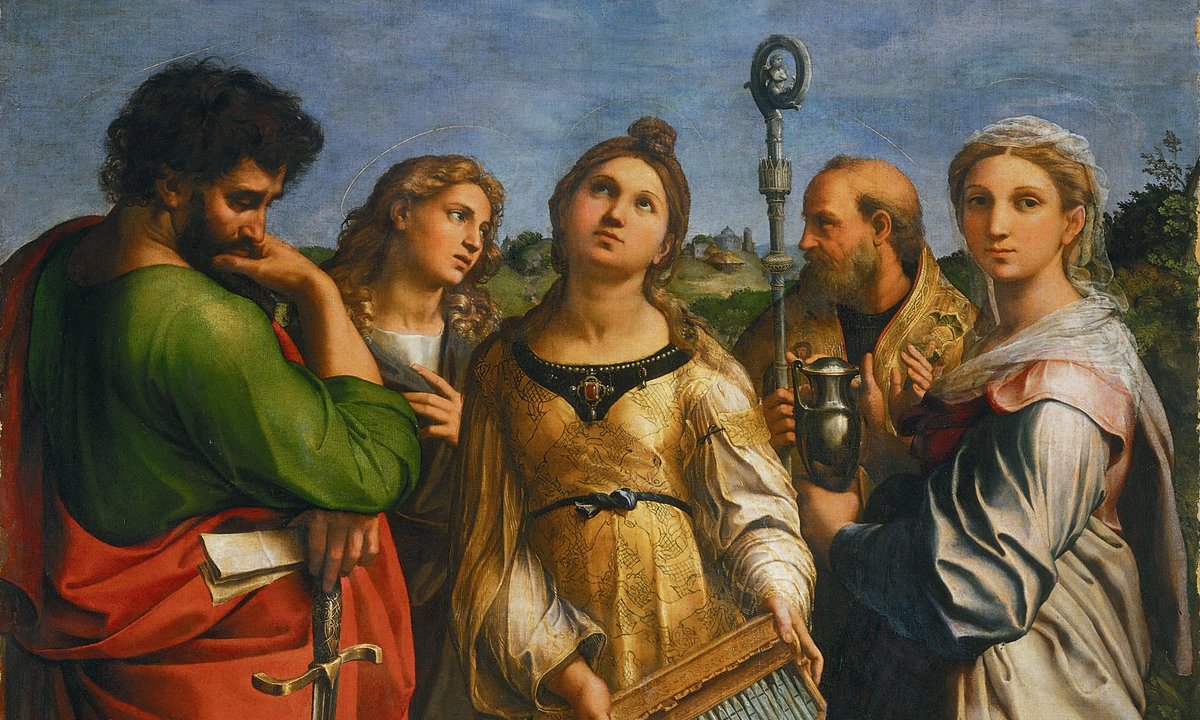
The French culture ministry has intervened at the last minute to block the sale of a drawing recently identified as by the German Renaissance master Hans Baldung Grien. It was due to be sold by the auction house Beaussant Lefèvre at the Drouot Paris venue on 23 March.
The bust-length portrait of a woman, measuring just 15.7cm by 10.4cm, carried a pre-sale estimate of €1.5m to €3m. The ministry’s decree, published on 21 March, declared it to be a national treasure, unable to leave France for 30 months.
Drawings by Baldung, widely regarded as Dürer’s most gifted protégé, are extremely rare, numbering around 250. The last to appear at auction was sold in 2007 for more than $3.7m, at Christie’s in New York. The new discovery is the only silverpoint portrait still in private hands, according to the Beaussant Lefèvre auctioneer Arthur de Moras.
Drawn in silverpoint on bone powder-primed paper, signed with a monogram of the artist and dated 1517, it depicts a woman dressed in bonnet, chinstrap and high-necked robe. An inscription identifies the sitter as Susanna Pfeffinger, the wife of a wealthy burgher of Strasbourg, where Baldung lived and worked for most of his life.
Owned by descendants of the Pfeffinger family for the past 500 years, the drawing was discovered last year by De Moras while preparing a probate inventory. It was attributed to Baldung by Patrick de Bayser, a leading French authority on Old Master drawings, who called it the most important work presented to him for authentication in the past ten years.
Although it featured in a photograph published in a history of Strasbourg in 1981, nobody knew what it was, De Bayser tells The Art Newspaper. “In fact, the family thought it might be by [the famed portraitist Hans] Holbein.”
“I said it can’t be a Holbein, that’s impossible. I immediately thought of Baldung, after the 2019 exhibition,” De Bayser says, referencing a major monographic show titled Hans Baldung Grien: Sacred/Profane, at the Staatliche Kunsthalle Karlsruhe in Germany.
The attribution to Baldung, based on technical virtuosity, the artist’s monogram and, not least, family connections between artist and sitter, has been validated by Christof Metzger, the chief curator of graphic arts at the Albertina, Vienna, and Dorit Schäfer, the head of prints and drawings at the Staatliche Kunsthalle Karlsruhe. The drawing probably came from the same sketchbook as a well-known series held in the Karlsruhe museum, Metzger tells The Art Newspaper, describing the find as “more-or-less a once in a lifetime discovery”.
An export licence application was filed in November 2025, and rejected this week by the French government. This puts in place a 30-month export block that allows potential French buyers time to raise funds to keep It in the country.
Explaining its ruling, the culture ministry cited the opinion of its Advisory Committee on National Treasures, which noted that only 12 silverpoint portraits by Baldung are currently known, none of them in French public collections and that “consequently, this is a work of major historical and artistic interest for the national heritage”.
“The recent reappearance of this female portrait, of great rarity in Baldung’s oeuvre and virtuoso silverpoint execution, anchored in Alsace by its uninterrupted provenance in the same Strasbourg family, (is) one of the last opportunities for such a work to join a French public collection,” the ministry ruling stated.
In response, Beaussant Lefèvre has suspended the sale. “The classification of this drawing as a national treasure, only 48 hours before the planned public auction … has compromised the possibility of organising a sale in normal conditions, despite strong interest from several international institutions and collectors,” the auction house said in a statement. The vendors will now seek to negotiate a private sale to a French buyer, De Moras adds.