
I’ve been tracking AI video generators since the very early days of blurry, morphing pixels, and if there is one universal truth developers and creators share today, it’s this: generating high-quality AI video burns through server computing power—and your wallet—like nothing else.
We’ve seen incredible advancements in fidelity recently, but the barrier to entry for building actual applications around these models has remained frustratingly high. If you are an indie developer or a startup trying to integrate text-to-video into your app, API costs can bankrupt you before you even launch.
But while digging through this morning’s tech updates, I spotted a massive shift. Google just dropped Veo 3.1 Lite, and it completely changes the economics of AI video production. Let me break down why this is one of the most important updates for developers this year, and why “cheaper” finally doesn’t mean “worse.”
The End of API Anxiety: Half the Cost, Same Speed

When Google introduced the Veo lineup, the quality was undeniably impressive, but scaling it for high-volume projects was a tough pill to swallow for smaller teams. With Veo 3.1 Lite, Google is directly targeting the bottleneck of production costs.
Here is the absolute best part of this announcement: Veo 3.1 Lite operates at less than half the cost of the Veo 3.1 Fast model, without sacrificing generation speed. Think about what that means for a second. If I’m building a social media marketing tool where users generate dozens of short promotional clips a day, my profit margins just doubled overnight. I don’t have to compromise on the speed at which my users get their results. Fast rendering times are crucial for user retention—nobody wants to stare at a loading bar for five minutes to see a 4-second clip.
As a massive bonus, Google also announced that starting April 7, they are permanently slashing the price of the heavier Veo 3.1 Fast model as well. It’s a clear signal: Google wants to democratize video generation and get it into the hands of as many developers as possible.
What Exactly Does Veo 3.1 Lite Bring to the Table?

You might assume that a “Lite” model strips away the pro-level features, but looking at the specs, I was genuinely surprised by how robust this offering is. It bridges the gap between practical, everyday utility and professional requirements.
Here is what you get under the hood:
Dual Modality Generation: It supports both Text-to-Video (typing a prompt from scratch) and Image-to-Video (animating an existing static image). This is huge for creators who want to bring their AI-generated Midjourney or Stable Diffusion stills to life.Native Aspect Ratios: Unlike older models that force you to generate a square video and awkwardly crop it, Veo 3.1 Lite natively supports both 16:9 (horizontal) for YouTube and desktop viewing, and 9:16 (vertical), which is an absolute necessity for TikTok, Instagram Reels, and YouTube Shorts.High-Definition Outputs: You aren’t stuck with potato quality. The model offers both 720p and 1080p resolution options. For 90% of mobile-first content, 1080p is the gold standard.Granular Duration Control: You can generate clips in 4, 6, or 8-second intervals. This is a brilliant feature for managing costs. If you only need a quick B-roll transition, you pay for 4 seconds. If you need a longer establishing shot, you scale up to 8. You aren’t forced to pay for a 10-second render when you only need a fraction of it.
Who is Veo 3.1 Lite Actually For?
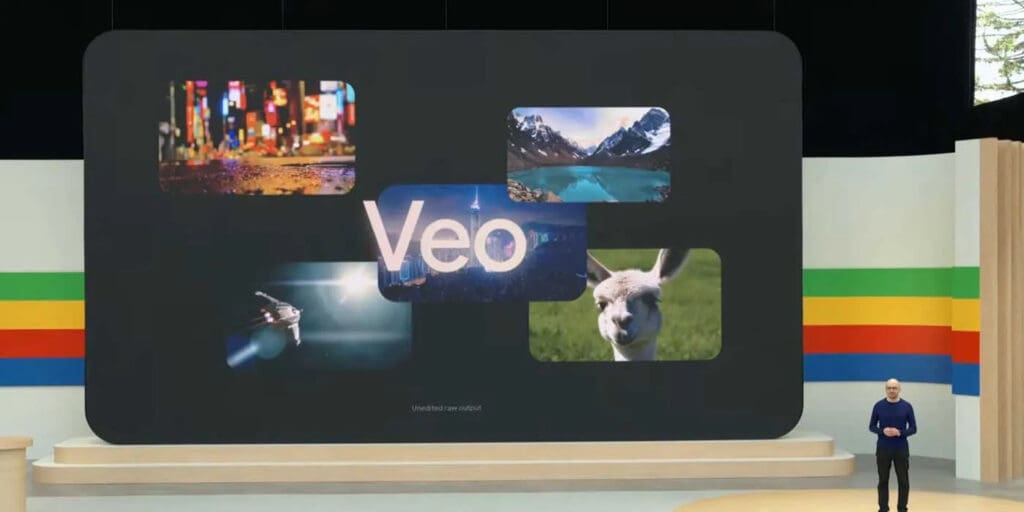
I don’t see this as a tool primarily designed for Hollywood studios trying to generate blockbuster CGI. Instead, this is the ultimate weapon for the high-volume creators and developers.
If I were running an automated faceless YouTube channel, a programmatic advertising agency, or a mobile app that turns user selfies into stylized animations, this is exactly the API I would hook into. It allows you to generate hundreds or thousands of clips a day without the terrifying end-of-month server bill.
It’s also a massive win for game developers. Imagine using Image-to-Video to rapidly prototype animated character portraits, environmental background loops, or cutscene animatics at a fraction of the cost of hiring a 3D animation team.
Getting Your Hands on It
If you want to start testing this right now, you don’t have to wait. Google has already opened the floodgates. As of today, Veo 3.1 Lite is live and accessible through the Gemini API and Google AI Studio on their paid plans.
I’m already planning to jump into AI Studio this weekend to test the latency and see how well the Image-to-Video feature handles complex lighting compared to the heavier models.
The AI video race is no longer just about who can make the most hyper-realistic dog walking down a street; it’s about who can make it affordable enough for the rest of us to actually use. Google just made a very aggressive move, and I expect the rest of the industry will have to adjust their pricing models fast to keep up.
I’m curious about how you would use this: If you had unlimited access to a cheap, fast AI video generator right now, what kind of app or content would you build first? Let’s brainstorm in the comments below!