Key Takeaways
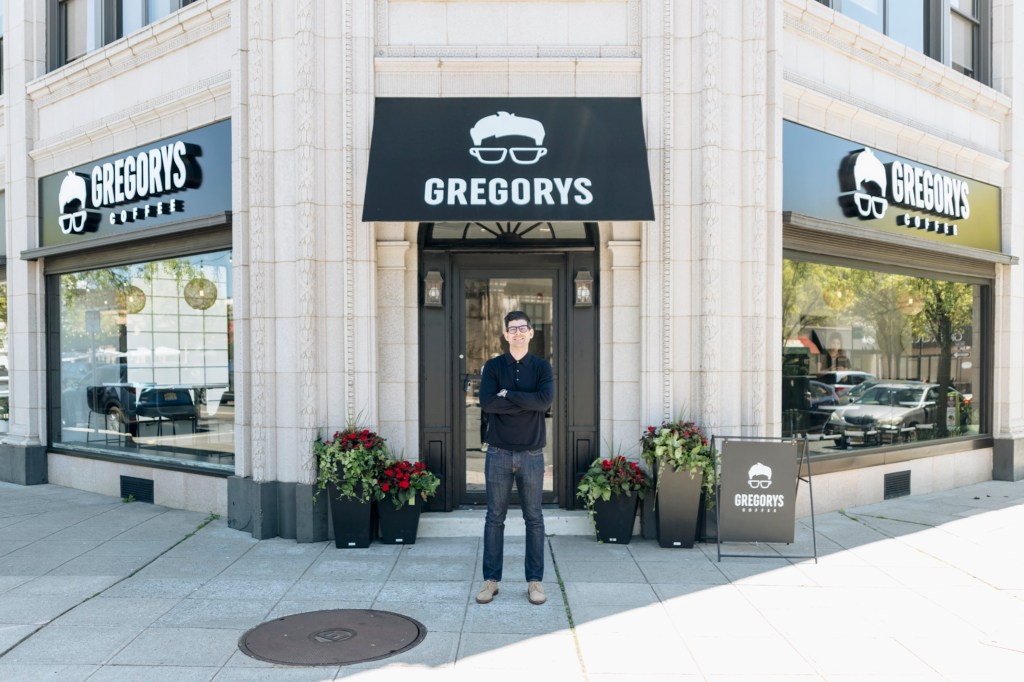
Gregorys Coffee has grown from one small Park Avenue bar in 2006 to 53 locations nationwide, with typical stores now doing over $1 million in annual sales.
Revenue reached about $40 million last year and is projected to hit roughly $45 million this year.
Gregorys Coffee founder and CEO Gregory Zamfotis attributes the growth to quality coffee, roasted in-house.
Two decades ago, Gregory Zamfotis was at a crossroads. He was a second-year law student at Brooklyn Law School and had just been offered a full-time position at a real estate law firm. The only problem was that Zamfotis wanted to open his own business.
“I grew up in the food business,” he explains in a new interview with Entrepreneur. “My father operated a number of concepts in New York City, so I grew up working with him.”
Zamfotis worked at his father’s sandwich shop during his time in law school. By the end of his education, he was effectively running the place. He wound up “really enjoying” the work and considering it as a potential career. He knew he wanted to start a business of his own one day, separate from his father’s endeavors. So after graduating from law school, he took his interest and passion for coffee and his experience working in food service, and decided to open his own coffee shop. He was 24 years old.
“If you were in the Midtown Financial District, the areas where the majority of New Yorkers are spending their time working, the only options for coffee really were Starbucks or Dunkin,” Zamfotis says. “I thought that was a huge opportunity because I grew up working there. I wanted to take what I had learned, apply it to the coffee industry, and do it in a part of the city that was extremely underserved at the time.”
Zamfotis started by opening one coffee bar on Park Avenue and decided it would simply be better than anything around it. The plan was to obsess over the drinks, the ingredients and the feel of the place until it earned a permanent slot in New Yorkers’ daily routines.
Day after day, cup after cup, that little shop turned into a magnet for regulars who didn’t just like the coffee; they were loyal to the brand. The identity sharpened around bold, playful branding and a menu that refused to cut corners.
“We wanted to do a quality specialty coffee operation in a volume setting,” Zamfotis says, describing early days when he put in “70 to 80 hours a week” at the store to make sure it ran exactly as he envisioned.
What surprised him
What Zamfotis didn’t fully understand at the time was how hard it would be to do coffee exceptionally well at scale. “I guess I was surprised at just how complex doing coffee really well was,” he says. “The only way we were gonna win is if we could differentiate ourselves from the national players or the other people doing coffee around the block.”
That realization pushed him into a kind of self-imposed coffee bootcamp. He visited shops, attended conferences and immersed himself in the craft. “I had to spend a lot of time and energy not only visiting other coffee shops, traveling, going to conferences, listening to speakers, and just pouring myself literally into all things coffee, to make myself an expert,” he says.
That work changed the culture and the product. “There’s a difference between doing things well and doing things great,” he explains. As he elevated the coffee program and training standards, customers began noticing the difference — and kept their daily habit. “Customers, maybe in the beginning, were coming because of all the other things…great service, fast, good-looking store…then once I started to elevate the coffee program higher and higher, while also keeping all those other elements so strong, that’s when we really started to make things better,” he says.
Today, Gregorys roasts its own beans in Long Island City, bakes fresh pastries and emphasizes personalization — from milk choices to syrup levels — while still moving fast. The goal, Zamfotis says, is that customers should feel like they’re sacrificing nothing: not time, not quality, not options.
Scaling from one store to 53 — and to $45 million
Zamfotis estimates the first shop took 12 to 18 months to find consistency; the company hit the $1 million annual sales mark around year two or three. That traction gave him the confidence to open a second location roughly two and a half years after the first — and it was an instant hit.
“When the first location may have taken 12 to 18 months to stabilize, the second location was stable from the get-go…very busy from the day we opened,” he says.
From there, growth became a function of systems and people. “I’ve always said you can only grow as fast as the people [you have] to help execute,” Zamfotis says. For about 12 years, every single person in a position of authority at Gregorys was promoted from within, often starting as baristas.
That philosophy helped the company expand from two stores to 53 across New York, New Jersey, Washington, D.C., Florida, California, Arizona and Tennessee. The financials now reflect that footprint. “Last year we did just around $40 million,” Zamfotis says. “This year, I believe the projection is closer to like $45 million.”
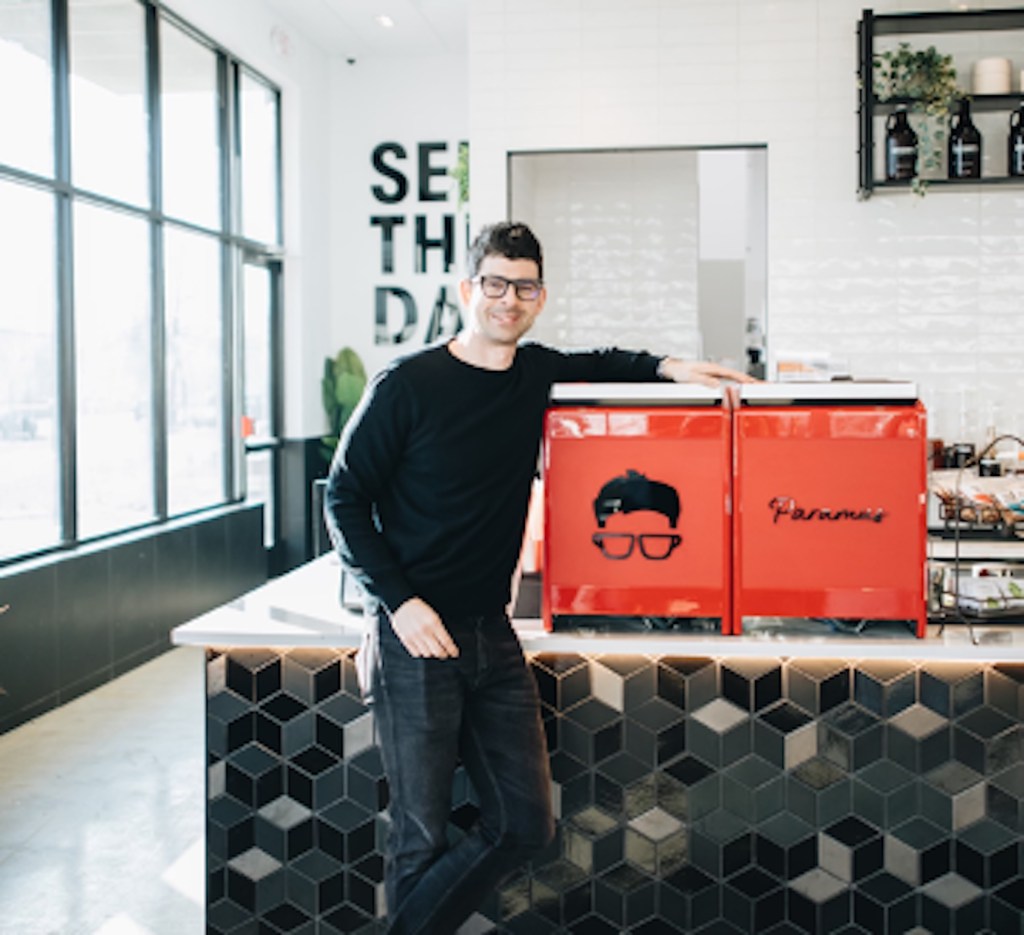
Exploring franchising
At some point, Gregorys hit a crossroads: keep grinding out corporate stores one by one, or admit that the “incredible box” they’d built was strong enough to share with other operators and scale faster than a single team ever could. That’s when Craveworthy Brands and its CEO Gregg Majewski stepped in as managing partner and corporate operator in August 2025, bringing a platform built for franchising, from training to shared services that could support a national push.
“We knew that if we wanted to continue to grow the brand at the speed that was necessary, the only way was to attach to franchising,” Majewski tells Entrepreneur in a new interview.
Now, with a 20-year track record and a typical store pulling in roughly $1 million in annual revenue (with high performers around $1.6 million and drive-thru models at about $1.4 million), Gregorys is no longer just the underdog Park Avenue café. It’s a New York–forged coffee brand stepping into the franchise spotlight, aiming to sell 50 to 75 locations in its first year of franchising this year and inviting operators to go toe-to-toe with the biggest coffee players in America.
“Any brand that’s been around the industry as long as that and has been successful in as many markets as it has over the 20-year timeframe is perfect for franchising — especially when you built your reputation in one of the hardest cities in the world to operate in, New York,” Majewski says. Gregorys has “a group of regulars that absolutely live and die [for] this brand,” Majewski explains.
Craveworthy Brands brings scale muscle to franchising ambition. The firm has 21 brands in its portfolio, eight of which are already franchising, and it provides the infrastructure that early franchisees often lack: training, shared services, construction support and operational systems built to replicate performance across stores. Craveworthy’s portfolio includes brands like Big Chicken, Taffer’s Tavern and Genghis Grill.
For would-be franchisees, Gregorys is now pitching itself as a way into a coveted segment that can otherwise be hard to access. Majewski notes that “some of the bigger players are sold out or aren’t accepting.” Gregorys offers a build-out cost “anywhere from $200,000 to $700,000,” he says.
Why franchising works
Majewski is clear about why he believes franchising works, not just for Gregorys but across Craveworthy’s portfolio. On the franchisor side, the hurdle is ensuring systems and procedures are in place so the company can train effectively and execute the product consistently.
On the franchisee side, the challenge is more psychological: “following the systems and procedures and reminding yourself that you bought into a system,” he says. The promise is that if the system is well designed and properly followed, it exists “for a reason so you can be successful.”
Majewski insists that culture is the differentiator in a successful franchise. He says success comes from “establishing an incredible culture in the system” and making sure operations are simple enough to replicate. “If any concept is ever too complicated, you can’t have the consistency,” he explains.
The goal is that “when you walk into a store in Indiana or a store in California, you get the same experience,” he says. For Gregorys, that means protecting not only the coffee quality and menu but also the feel of a brand born on Park Avenue and refined in New York City’s daily grind.
Key Takeaways
Gregorys Coffee has grown from one small Park Avenue bar in 2006 to 53 locations nationwide, with typical stores now doing over $1 million in annual sales.
Revenue reached about $40 million last year and is projected to hit roughly $45 million this year.
Gregorys Coffee founder and CEO Gregory Zamfotis attributes the growth to quality coffee, roasted in-house.
Two decades ago, Gregory Zamfotis was at a crossroads. He was a second-year law student at Brooklyn Law School and had just been offered a full-time position at a real estate law firm. The only problem was that Zamfotis wanted to open his own business.
“I grew up in the food business,” he explains in a new interview with Entrepreneur. “My father operated a number of concepts in New York City, so I grew up working with him.”
Zamfotis worked at his father’s sandwich shop during his time in law school. By the end of his education, he was effectively running the place. He wound up “really enjoying” the work and considering it as a potential career. He knew he wanted to start a business of his own one day, separate from his father’s endeavors. So after graduating from law school, he took his interest and passion for coffee and his experience working in food service, and decided to open his own coffee shop. He was 24 years old.