
Every time I hear the final ten seconds of a countdown on a live stream, I still get goosebumps. There is something fundamentally awe-inspiring about watching thousands of tons of metal and fuel defy gravity and punch a hole straight through our atmosphere. When I first started tracking rocket launches, it was a rare event. You’d mark your calendar weeks in advance. Today? I was just looking at the upcoming manifest, and honestly, the sheer volume of traffic leaving Earth right now is absolutely mind-blowing.
We aren’t just exploring space anymore; we are commuting to it.
I’ve compiled the latest global space launch schedule, and instead of just giving you a dry list of dates and times, I want to break down exactly what is happening above our heads. From fierce corporate rivalries in Low Earth Orbit to highly classified payloads, here is my deep dive into the upcoming missions you need to watch.
The Mega-Constellation War: Starlink vs. Amazon

If you look at the schedule below, you’ll immediately notice a trend: SpaceX is working overtime. They are launching Starlink batches from both Cape Canaveral in Florida and Vandenberg in California with terrifying efficiency.
But what really caught my eye this month isn’t just Elon Musk’s dominance—it’s the fact that Jeff Bezos is officially crashing the party.
The Challenger: We have multiple Amazon Leo (Project Kuiper) launches scheduled aboard ULA’s Atlas V and Arianespace’s Ariane 64.The Stakes: This is the beginning of the real orbital internet war. Starlink has had a monopoly for a while, but Amazon is aggressively pushing to build its own mega-constellation. As a tech nerd, watching two billionaires fight for internet dominance in the vacuum of space is pure cinematic drama.
The Heavyweights and The Mystery Payloads

While the commercial internet race is fascinating, I always get intrigued by the missions that don’t tell us everything.
China’s Secret Cargo
The China Aerospace Science and Technology Corporation has two launches lined up (Long March 8 and Long March 6A) carrying “Unknown Payloads.” Usually, when a space agency doesn’t disclose the payload, it’s military or advanced surveillance tech. China is rapidly expanding its Tiangong space station and lunar ambitions, so every launch they make right now is a critical piece of a much larger puzzle.
Blue Origin’s Next Big Move
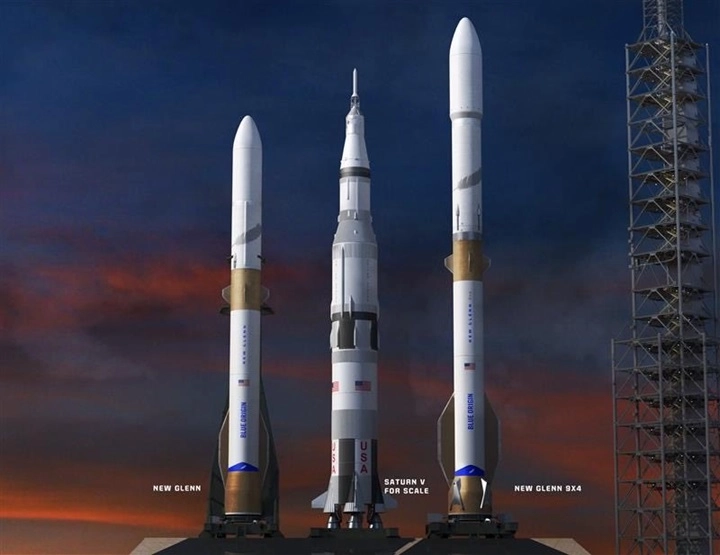
Another massive highlight for me is the BlueBird Block 2 #2 mission. Blue Origin is utilizing its New Glenn heavy-lift rocket. For years, people joked that Blue Origin was too slow compared to SpaceX. But seeing New Glenn on the manifest for actual payload delivery shows they are finally flexing their heavy-lifting muscles. If I were you, I’d definitely tune into this launch stream just to see the sheer scale of that rocket.
The Scientific Marvels
Not everything is about money or military power. I am genuinely excited about the SMILE (Solar wind Magnetosphere Ionosphere Link Explorer) mission launching on an Avio Vega-C rocket from French Guiana. This is a joint European-Chinese mission designed to study how solar winds interact with Earth’s magnetic field. It’s the kind of pure science that helps protect our global power grids from solar flares.
The Official Space Launch Schedule
I’ve organized all the confirmed and projected launches into a quick-reference table. Keep in mind that spaceflight is incredibly difficult, and weather or technical scrubs can change these times at a moment’s notice.
The Global Expansion of the Final Frontier

Looking at this list, something beautiful stands out to me. We have launches happening in Florida, California, China, Kazakhstan, French Guiana, New Zealand, Russia, and India.
Take a look at Skyroot Aerospace’s Vikram-I demo flight. India’s private space sector is booming right now, proving that space is no longer an exclusive club for Cold War superpowers. Startups from all over the world are figuring out how to build reliable, affordable rockets.
If you are planning to watch any of these live, I highly recommend checking out the official YouTube streams from SpaceX, ULA, and Rocket Lab. They provide incredible telemetry data and live booster landing cameras that never get old. The fact that we now expect a first-stage booster to casually land itself on a drone ship in the middle of the ocean is a testament to how far we’ve come.
As I wrap up my thoughts on this massive launch schedule, I can’t help but wonder about the future of our skies. With so many satellites being pumped into orbit every single week, it’s an exciting time, but also a crowded one.
I have a question for you all: Looking at all these launches, are you more excited about the rapid expansion of global satellite internet, or are you starting to worry about space debris and the night sky getting too crowded? Drop your thoughts in the comments, I’d love to read your take!