Cardano has opened public testing for a major throughput upgrade and advanced a mainnet hard fork, pushing forward the blockchain’s most consequential architectural changes in years.
These milestones are arriving alongside a sharp decline in ADA and a multimillion-dollar wallet exploit, widening the divide between Cardano’s engineering progress and the condition of the ecosystem built around it.
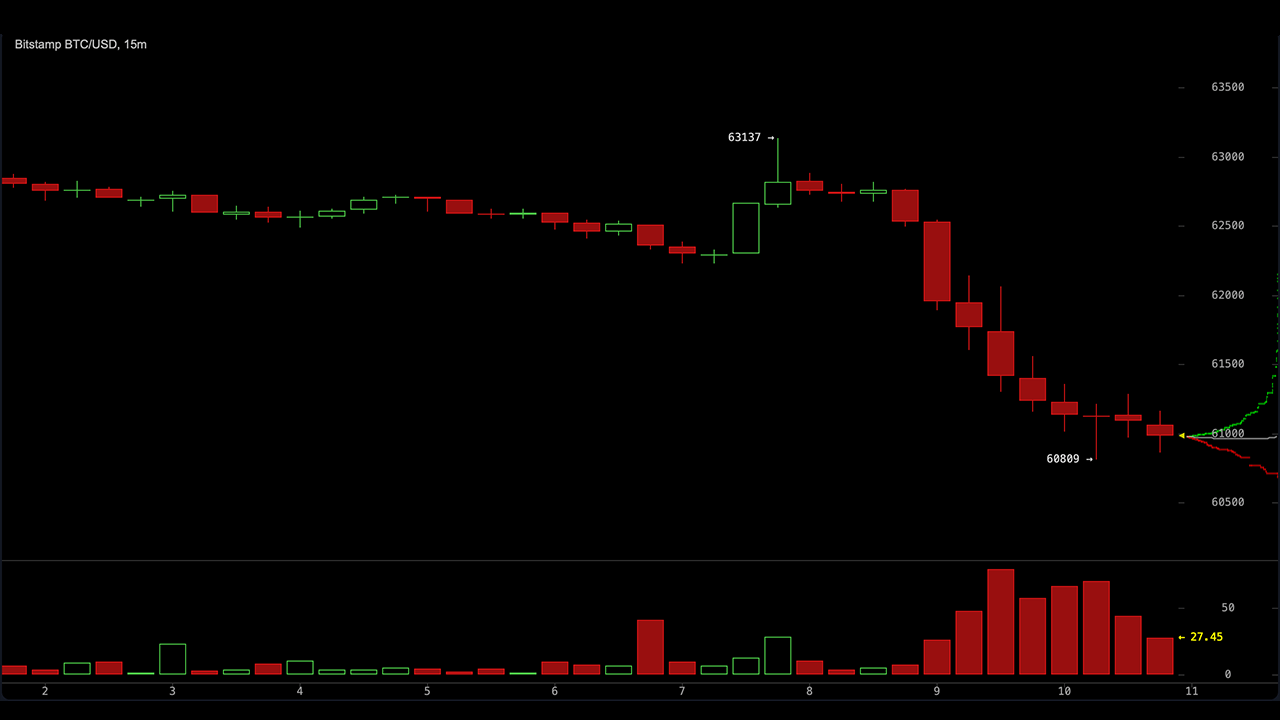
Data from CryptoSlate shows that ADA, the network’s native token, was trading near $0.14, its lowest price level since 2020. ADA has fallen more than 55% this year and risks falling out of the top 20 crypto assets by market capitalization if its poor price performance continues.
Still, CoinGlass data show that traders betting on ADA are leaning toward a rebound, though the size of their positions suggests limited conviction.
According to the crypto analytical firm, Binance had about 2.1 long ADA accounts for every short account, while the ratio among the exchange’s top traders stood near 2.49. OKX showed about 1.46 long accounts for every short account.
However, the aggregate positioning among Binance’s top traders was almost evenly divided. The position ratio stood at 0.9754, leaving the group marginally net short despite the much larger number of accounts betting on a recovery.
This imbalance suggests that many traders are attempting to catch a bottom with relatively small long positions while fewer participants maintain larger bearish bets.
Essentially, this resembles cautious bottom fishing after a severe sell-off rather than a decisive return of speculative demand.
SecondFi exploit deepens ecosystem strain
That pressure has already forced contractions in Cardano’s economy, with projects like TapTools and JPG Store scaling back or shutting down operations this year.
That fragility came into sharper focus when SecondFi, the successor to the Yoroi wallet, disclosed a failure involving software used to generate Cardano wallets.
In an X statement, SecondFi said its platform users lost roughly 16 million ADA across 374 addresses. At ADA’s recent price, the stolen assets were worth about $2.4 million.
Engineers initiated emergency rescue measures during the exploit and secured about 129 million ADA before attackers could drain it, the company said. Those assets were being transferred to an independent third-party custodian to be held on behalf of affected users.
Mitchell Amador, CEO and Founder of blockchain security firm Immunefi, told CryptoSlate that:
“SecondFi’s wallet software exposed the private keys it generated, and our research has been tracking exactly this move for two years. Key compromises inside DeFi protocols dropped to 8.1% of losses by 2025 because teams hardened their key management.
The attackers didn’t quit. They moved to where keys are held in bulk: exchanges like Bybit, custodians, and now wallet generation code itself.”
As of press time, the wallet provider said it had identified the source of the vulnerability and patched accounts that had not been affected. It also warned customers against restoring compromised recovery phrases in other Cardano wallets, as doing so would not eliminate the underlying risk.
SecondFi has hired an external accounting firm to conduct a special audit of the recovered funds and opened a process through which customers can submit claims.
Leios moves scaling design into public testing
Amid this external turbulence, Input Output, the research and engineering company behind Cardano, launched the Musashi Dojo public testnet to test Ouroboros Leios under realistic and adversarial conditions.
Leios is designed to address one of Cardano’s longest-running technical criticisms: that the network’s base layer cannot process enough transactions to support widespread activity.
The upgrade introduces a second block type alongside the existing Praos block. The two block types perform different roles, allowing Cardano to increase transaction throughput without replacing the consensus system that has secured the network since its Shelley era.
Cardano founder Charles Hoskinson described the Leios testnet as the culmination of about a decade of research into whether probabilistic proof-of-stake systems could provide mathematical security assurances comparable to those associated with Bitcoin.
Input Output estimates that the architecture could increase throughput by five to 20 times at the consensus layer.
The public testnet does not carry real ADA. Its purpose is to test, parameterize, and validate the design rather than produce headline performance figures.
Independent stake pool operators, developers, and other community participants will be asked to stress the network, identify weaknesses, and attempt to break the system under demanding conditions. The results will help developers refine the software before deciding whether it is ready for mainnet deployment.
The testnet will progress through five phases named Earth, Water, Fire, Wind, and Void after sections of Miyamoto Musashi’s “The Book of Five Rings.”
Developers aim to complete repeated rounds of testing by the end of the year, though Input Output has not announced a firm date for deploying Leios on the main network.
Van Rossem prepares Cardano for its next era
Cardano is also advancing the Van Rossem hard fork, formally known as Protocol Version 11.
The initiation proposal was submitted to Cardano’s mainnet governance system on June 16 during Epoch 637 after weeks of testing and infrastructure preparation across the Preview and Preprod networks.
Van Rossem is an intra-era hard fork, allowing Cardano to introduce new features without immediately moving into a new development era. That approach is intended to reduce disruption for exchanges, wallets, decentralized applications, and stake pool operators.
The upgrade also prepares Cardano’s architecture for the Dijkstra era, in which Leios is expected to eventually move toward mainnet integration.
Van Rossem and Leios occupy different positions in that roadmap. Van Rossem is the near-term protocol transition moving through governance, while Leios is the broader scaling system that has only entered public testing.
Intersect, the member-based organization supporting Cardano’s development, said 86% of block production was running on node version 11 as Epoch 638 approached its end. Exchange readiness stood at 50.24% when measured by liquidity.
The figures show that adoption among block producers has progressed further than readiness among trading platforms. The hard fork remains subject to Cardano’s governance process and has not yet been activated on the main network.

What is next for Cardano?
Cardano’s next test will be turning its expanding technical roadmap into activity that investors can measure.
The immediate focus is the Musashi Dojo testnet, where successful testing would move Cardano closer to addressing a long-standing concern that its base layer lacks the capacity to support activity at a competitive scale.
Meanwhile, the network’s roadmap extends beyond scaling.
Hoskinson has cited Peras, intended to accelerate transaction finality; Chronos, a system designed to reduce dependence on external time synchronization; Crypsinous, a privacy-focused protocol; and Minotaur, a consensus design that could draw security from multiple sources.
Those projects remain at different stages of research and development, leaving their deployment schedules and eventual market impact uncertain.
Together, the initiatives outline Cardano’s plan to become faster, more responsive, and better able to support a broader range of financial applications.
However, their effect on ADA sentiment will depend on whether technical improvements translate into a return of developers, users, transactions, and capital to the network.
That conversion has yet to happen. This year, Cardano has aggressively pursued new partnerships and integrations while ADA’s price and parts of its application ecosystem have contracted. The SecondFi incident has also raised the threshold for rebuilding confidence by showing that protocol security must be matched by safer wallets and applications.
A sustained improvement in market sentiment would therefore require more than successful hard forks.
Investors will be watching for Leios to withstand public testing, for exchanges and stake pool operators to complete the Van Rossem transition, for affected SecondFi users to recover their assets, and for Cardano applications to attract durable activity after the downturn.
Evidence of rising network usage alongside stronger wallet safeguards could prompt traders to reassess ADA after its five-year decline. Without that follow-through, the upgrades risk remaining engineering achievements that produce little immediate change in demand for the token.