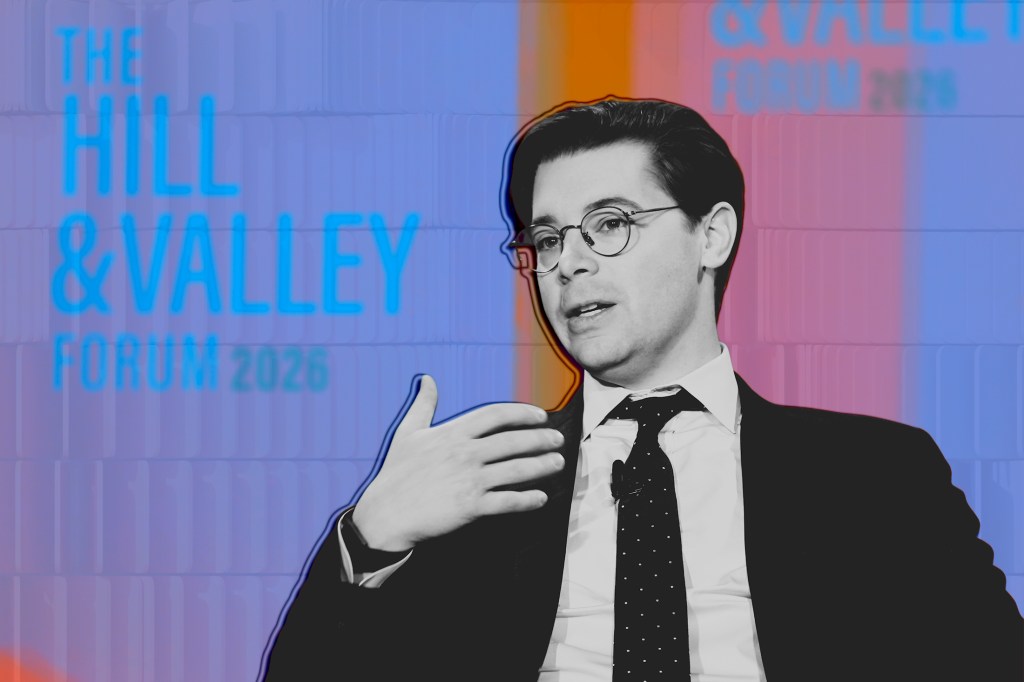
Mikhail Piotrovsky, the director of the State Hermitage Museum in St. Petersburg and a vocal supporter of Russia’s full-scale invasion of Ukraine, is listed in the European Union’s 20th package of sanctions, which was adopted on 23 April.
It is a major move against a cultural power player who used to host European peers at one of the largest art museums in the world—the Winter Palace of the tsars—though leaders and cultural officials of many other countries still visit the museum, usually as part of meetings with Vladimir Putin.
Mikhail Shvydkoy, Vladimir Putin’s international cultural envoy, told the official Tass news agency on 28 April that the European sanctions against Piotrovsky “constitutes an even higher form of recognition for his work” and is Europe’s, not Russia’s, loss.
“Interaction with Mikhail Borisovich [Piotrovsky]—and with the Hermitage—is a boon for any cultural institution,” Shvydkoy said. “The absence of such interactions is a regrettable thing. And, I believe, these restrictions will bring no joy to any museum professionals in Europe or elsewhere.”
Shvydkoy has been at the centre of cultural news recently following his announcement last month that Russia will be bringing a programme to the Venice Biennale for the first time since the 2022 invasion of Ukraine.
Piotrovsky has run the Hermitage since the early 1990s, which is also when he met Putin, then a city bureaucrat back from a stint as a KGB agent in East Germany. In an interview with The Art Newspaper in 2021, Piotrovsky defined their connection to Russia’s imperial capital and each other. “It’s not that I’m Putin’s person since the early 90s,” he said. “Putin has been my person from the early 90s. He is from Petersburg. He had approximately the same job that I did. We both worked for the reputation of Petersburg. So indeed he is closer to me than many others.”
The official sanctions listing calls Piotrovsky out for being a “close associate” of Putin, who has “actively supported and justified Russia’s war of aggression against Ukraine”. It cites his comparison of the global role of Russian culture to the “special military operation”, the Kremlin’s term for the war. Piotrovsky laid out his vision of culture as a weapon of geopolitics in interviews with Rossiiskaya Gazeta, the official government newspaper, in 2022 and 2023.
In its announcement, the EU says Piotrovsky also backed “Russian legislation enabling the incorporation of cultural items from Ukrainian museums into Russia’s State Museum Fund” and “unauthorised archaeological excavations in occupied Crimea, including the destruction of protected Ukrainian heritage sites, thereby serving the Kremlin’s goal of legitimising its territorial claims under the guise of academic work”.
The document states: “Therefore, Mikhail Piotrovsky is supporting actions or policies which undermine or threaten the territorial integrity, sovereignty and independence of Ukraine.”
Three other cultural officials implicated in the Crimean archaeological digs are also listed in the new sanctions package.
On Tuesday 28 April, Alexander Butyagin, a Hermitage archaeologist who had worked for years on excavations in Crimea, was released by Poland in a prisoner exchange with Russia. Butyagin was arrested in Poland in December 2025 at the request of Ukraine, which was seeking his extradition on charges of conducting illegal excavations in Crimea.
At a presentation of his book I am an Arabist in Moscow on 28 April, Piotrovsky—who has not yet commented directly about the sanctions—spoke about Butyagin’s release. “First and foremost, I must share the joyful news that today our colleague Sasha Butyagin—an archaeologist who had been arrested—was exchanged and released from a Polish prison,” said Piotrovsky, the Interfax news agency reported. “He has been exchanged; he is already on Belarusian territory and will be home very soon. So, everything is wonderful—and this, too, is part of our shared history.”