
Lending has always depended on a financial institution’s ability to assess risk, make informed decisions, and deliver capital efficiently. But many of the systems supporting that process remain slow, fragmented, and heavily manual. Commercial lenders still spend days gathering documents and spreading financials, while consumers and small businesses increasingly expect faster decisions, flexible payment options, and seamless digital experiences.
The companies demoing at FinovateFall 2026, taking place on September 9 through 11 in New York, are approaching these challenges from several angles. Some are using AI to accelerate underwriting and automate operational work. Others are embedding financing and flexible payment options directly into digital banking, helping institutions identify household opportunities, or rebuilding commercial lending around borrower self-service. Together, these five companies demonstrate how smarter technology can help financial institutions improve speed, efficiency, and access to financing.
ALoan
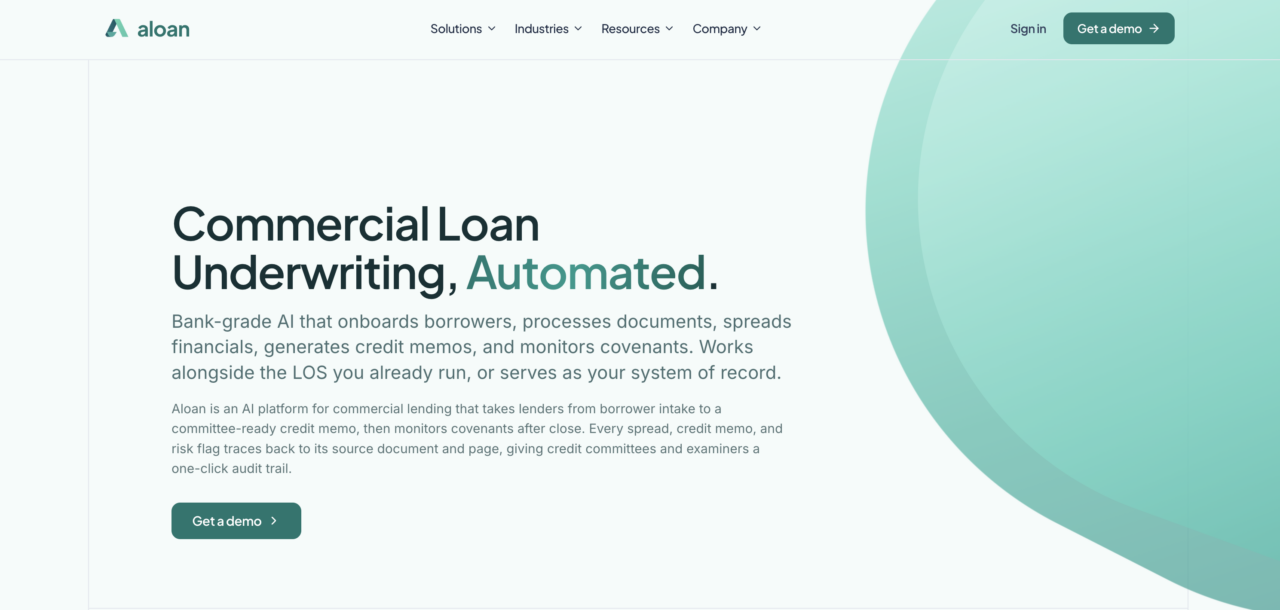
ALoan uses AI to automate commercial underwriting and help lenders move from borrower documents to a completed credit memo in less than 30 minutes. The platform spreads financial information from tax returns, bank statements, and borrower financials, applies the lender’s credit policies, and links each figure and conclusion back to its original source. By automating document collection, financial spreading, and credit memo preparation, ALoan enables commercial lending teams to increase throughput and reach term sheets faster without adding staff or replacing existing systems.
Clockout
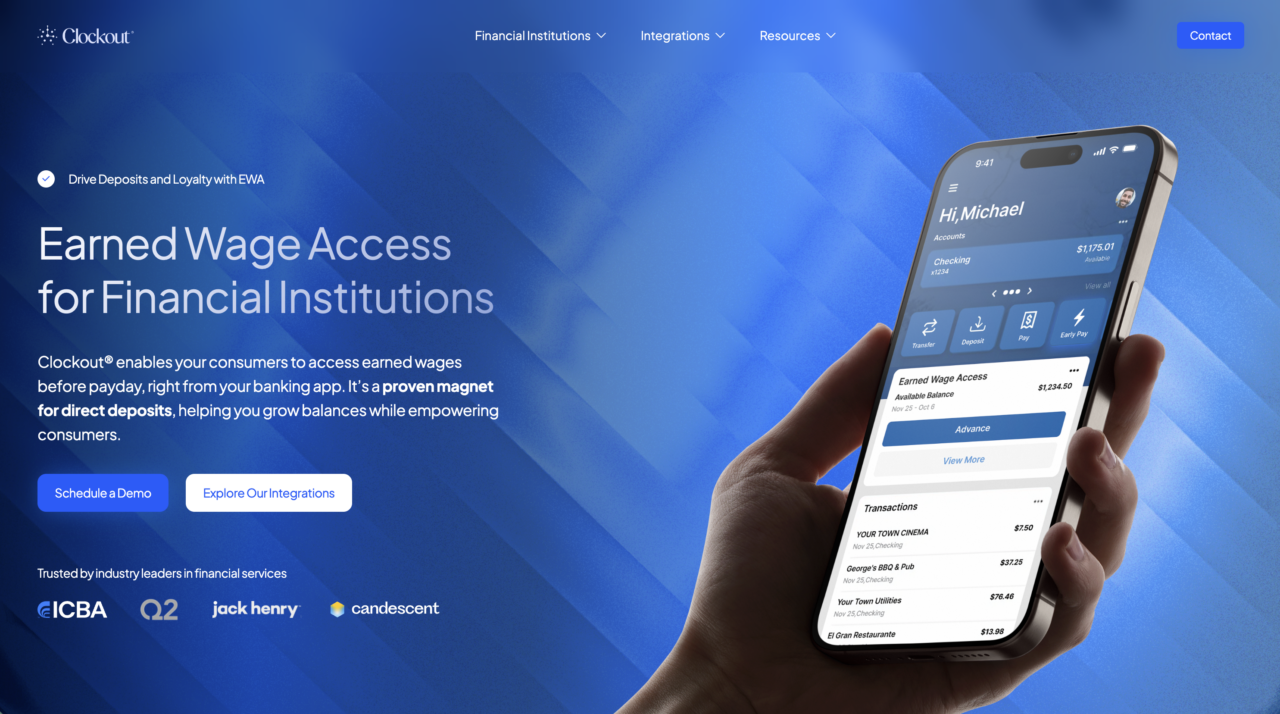
Clockout helps banks and credit unions embed financial wellness and liquidity tools into their customer experiences. The platform is designed to increase direct deposit relationships, generate new fee revenue, and strengthen customer engagement by providing users with more ways to manage short-term financial needs. For financial institutions seeking to deepen primary account relationships, Clockout offers a way to combine financing access with broader financial wellness.
equipifi
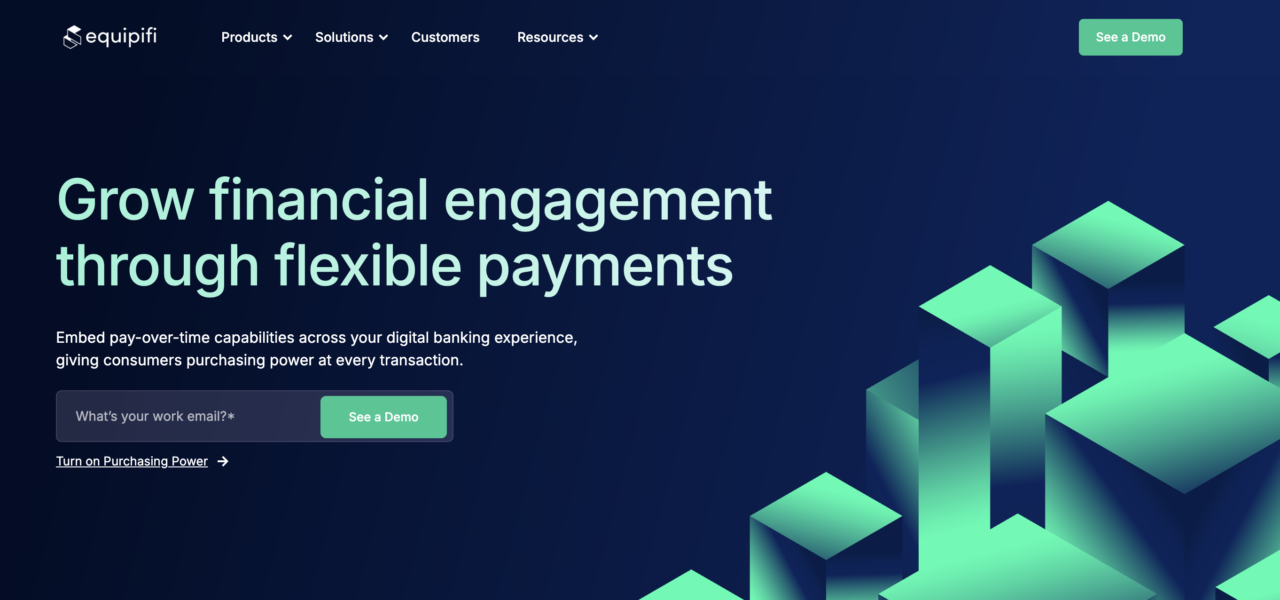
equipifi enables banks and credit unions to offer Buy Now, Pay Later (BNPL) and flexible payment options directly within their digital banking platforms. Its technology allows financial institutions to present personalized purchasing power and financing offers based on customer behavior and purchase intent, including through real-time mobile notifications. By bringing BNPL inside the banking relationship, equipifi helps financial institutions participate more directly at the point of sale rather than ceding that interaction to third-party providers.
OptimaFI
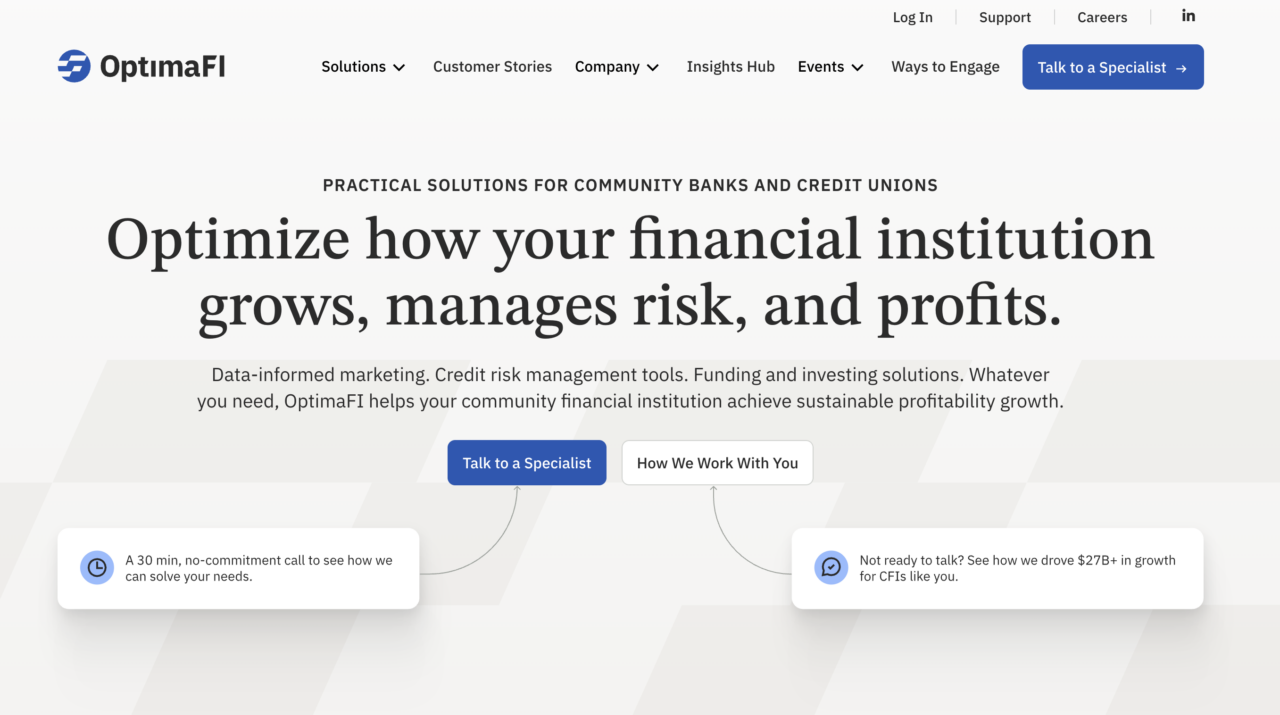
OptimaFI’s Household Insights platform gives community banks and credit unions a household-level view of customer accounts and performance. The platform benchmarks institutional data against more than 14 billion private peer data points and provides segment-level recommendations related to growth and risk. Because it does not require a core integration, financial institutions can begin using the platform in a matter of days to identify opportunities across deposits, lending, and broader household relationships.
QuickFi
QuickFi offers an end-to-end digital platform for commercial equipment financing that allows borrowers to self-serve from application through final payment. The company replaces manual, paper-heavy lending processes with a digital experience that can deliver financing decisions and documentation in minutes, 24 hours a day. QuickFi helps banks and equipment manufacturers serve small business borrowers more efficiently while reducing the staffing and operating costs associated with traditional commercial lending models.
Why banks should care
Speed has become a competitive advantage in lending. Borrowers are less willing to wait weeks for a credit decision when another provider can deliver an answer in hours or minutes. At the same time, banks and credit unions are under pressure to grow loan portfolios without proportionally increasing headcount or operational expense. Technologies that automate underwriting, document collection, reconciliation, and servicing can help institutions make faster decisions while preserving the judgment and oversight required for responsible lending.
The definition of lending is also expanding. Flexible payments, embedded financing, household intelligence, and digital self-service are blurring the lines between traditional loans, payments, and financial wellness. Financial institutions that treat these capabilities as part of a broader customer relationship may be better positioned to capture more borrowing activity, deepen engagement, and compete with nonbank providers. The companies demonstrating at FinovateFall 2026 show how institutions can modernize both the front-end borrower experience and the operational infrastructure that supports the lending process.
Photo by Monstera Production
Views: 83