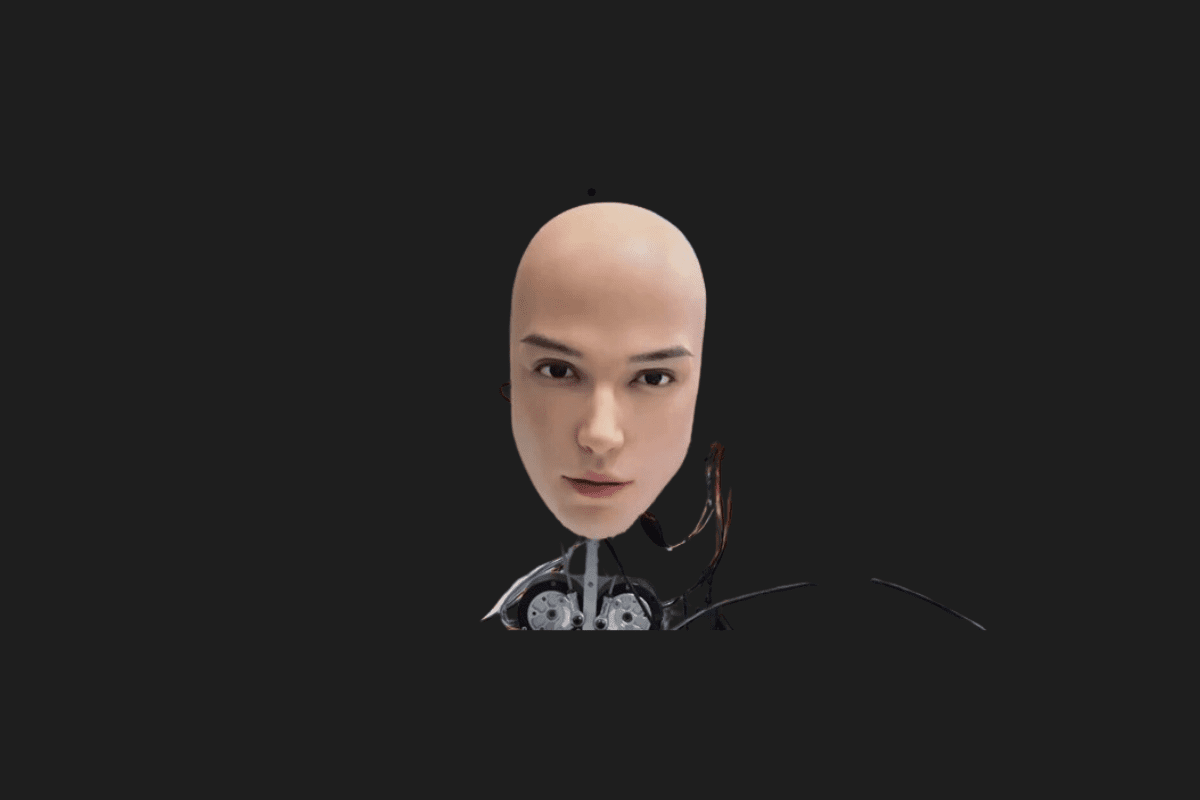
When I was digging through some old research archives the other night, I stumbled upon a piece of history that honestly made my blood run cold. We’re all used to seeing synthetic humans or wild genetic mutations in movies like The Matrix or Blade Runner, right? We comfort ourselves by saying, “It’s just science fiction.” But let me tell you, the line between fiction and reality is completely blurred when you look at the hidden chapters of genetic history.
What happens when human DNA and chimpanzee genes collide in a secret laboratory?
While researching this, I realized that we aren’t just talking about a futuristic dystopia. We are talking about experiments that actually happened, and modern technologies that are pushing us dangerously close to the plot of The Island of Dr. Moreau. Let’s break down the science, the history, and the terrifying possibilities of our genetic future.
The Soviet Era’s Deepest Secret: The “Humanzee” Experiments

You might think that mixing human and animal DNA is a purely modern ethical dilemma born from advanced gene-editing tools. I thought so too, until I read about Ilya Ivanov.
In the 1920s, under the Soviet regime, this real-life scientist was funded to do the unthinkable: create a human-ape hybrid. Ivanov traveled to Africa and attempted to inseminate female chimpanzees with human sperm, and later, controversially, tried to set up experiments doing the reverse with human volunteers in Soviet Russia.
Why did they do it?
Ideological motives: The regime allegedly wanted to prove Darwinian evolution in the most radical way possible to dismantle religious beliefs.The super-soldier myth: Rumors have always swirled that Stalin wanted an invincible, tireless, and highly resilient workforce or army.
Ivanov’s experiments ultimately failed. But looking back at it now, his failure wasn’t due to a lack of terrifying ambition; it was purely due to a biological firewall that he didn’t have the technology to breach.
The Ultimate Firewall: Why Does Our DNA Lock Down?

Here is the part that always fascinates me: Humans and chimpanzees share about 98.8% of their DNA. We are incredibly close cousins on the evolutionary tree. So, why did Ivanov fail? Why don’t our cells just cooperate and bridge that tiny gap?
That final 1.2% difference isn’t just a minor detail; it is a massive, complex biological lock. When I dive into the genetics of it, a few critical things stand out:
Chromosome Mismatch: Humans have 46 chromosomes (23 pairs), while chimpanzees have 48 (24 pairs). During human evolution, two ancestral ape chromosomes actually fused together to form human chromosome 2. This structural difference makes natural reproduction virtually impossible.Cellular Rejection: Even if fertilization miraculously occurs in a lab setting, the cell division process quickly breaks down. The biological instructions are too conflicting. It’s like trying to run an advanced iOS app on an old Android operating system—it immediately crashes.The Immune Response: Our bodies are hyper-vigilant. Any foreign genetic material that manages to bypass the initial stages is violently attacked and dismantled by immune defenses.
Nature has built a strict boundary. But what happens when we stop relying on nature and start writing the code ourselves?
Modern Gene Editing: Are We Awakening Dr. Moreau?

This brings me to the modern day, and this is where things get intensely real. We don’t need clumsy, 1920s-style insemination experiments anymore. We have CRISPR. We have the ability to literally copy, paste, and delete genetic code at will.
Today, scientists are actively creating chimeras—organisms that contain cells from two different species.
We are growing human stem cells inside pig embryos with the noble goal of harvesting organs for human transplants.We are injecting human genes into monkey brains to study neurodevelopment and diseases like autism or Alzheimer’s.
When I look at this, I see a double-edged sword. On one hand, we could eradicate waiting lists for organ transplants and cure genetic diseases. On the other hand, where exactly is the line? If a monkey is given human brain genes and suddenly starts showing enhanced cognitive abilities, what are we creating?
We are no longer just observing evolution; we are actively hacking it. The biological firewall that stopped Soviet scientists nearly a century ago is currently being bypassed line by line in modern laboratories.
Coding the Future
We always thought the terrifying synthetic biology of sci-fi movies was generations away. But the reality is that the future isn’t fiction—it is being coded right here, right now, in petri dishes and genetic sequencing machines around the world.
The boundaries of evolution are expanding, and we are the ones holding the blueprint. The question isn’t whether we can merge human and animal biology anymore; the question is whether we should.
I’ve been thinking about this non-stop since I started diving into the topic. If we could perfectly edit that final 1.2% genetic difference to cure all human diseases, but it required crossing the ethical line of human-animal hybrids, would you support it? Where do you draw your personal line in the sand? Let me know what you think below.