
Quick Breakdown
Traditional bonds may sound old-fashioned, but they are still a darling for many investors. The $145 trillion bond market has long depended on slow, paper-based processes that are costly, hard to access for everyday people, and not very transparent.
Hosted on blockchains, tokenized bonds allow for fractional ownership, automated payments, built-in compliance, real-time transparency, and flexible structures. This makes investing in bonds quicker, less expensive, and open to more people.
Tokenization is one of the hottest trends in Web3, and in the near future, bonds could become integrated with DeFi, reach more investors, and boost liquidity. However, this depends on the availability of clear regulations, reliable technology, cultural acceptance, and investor education.
Bonds might not get as much attention as Bitcoin or NFTs, but they form a $145 trillion-strong backbone of global finance. Still, much of this huge market relies on outdated systems. Paper certificates, slow settlements, and many middlemen mean traditional bonds haven’t fully entered the digital age.
Blockchain technology is being used to fix this by making bond issuance, trading, and settlement faster, safer, and more open. This article looks at how tokenized bonds are disrupting the bond market, covering the underlying technology, impact on trading and liquidity, real-world examples currently in play, and what the future might hold for this budding sector.
The Problem: Why Traditional Bond Markets Are Ripe for Disruption
The bond market is huge, but the way it operates is outdated, slow, and difficult for many people to access.
Too many middlemen increase costs and slow things down
The sale and purchase of bonds usually involve banks, brokers, custodians, and clearing houses. Each expects its share of fees and adds additional layers of processing. As a result, the whole transaction turns out to be expensive and lengthy, especially when compared to new digital methods that could streamline things.
Limited access for everyday investors
Most bonds are designed specifically for institutional customers like banks, pension funds, and governmental agencies. The minimum amount of investment is relatively high, and entry barriers remain substantial. In essence, retail investors are generally shut out from the market despite the fact that bonds represent one of the most secure asset classes within financial markets.
Transparency issues in the bond market
Unlike stocks, the bond market is not always easy to track for investors. The price at which bonds are bought, traded, and sold, as well as the deal that was made by the two parties in question, might be concealed. This results in a lack of transparency, therefore making it difficult for an investor to decide whether they are getting the right bargain.
Time consumption in transaction processing
It is usually time-consuming when transacting using bonds. It takes up days or even weeks for the transaction to be settled, whether it is domestic or international. This is risky because funds and assets remain stagnant during the processing period.
High risk of errors and inefficiencies
Since most processes in the bond market are carried out manually, the chances of committing errors are quite high. For instance, users can make typing mistakes, settlement errors, or misunderstandings between the seller and buyer.
Tokenized Bonds: Beyond Digital Representation
Tokenized bonds aren’t just traditional bonds moved onto a screen; they are programmable assets that can automate processes, expand access, and introduce entirely new features.
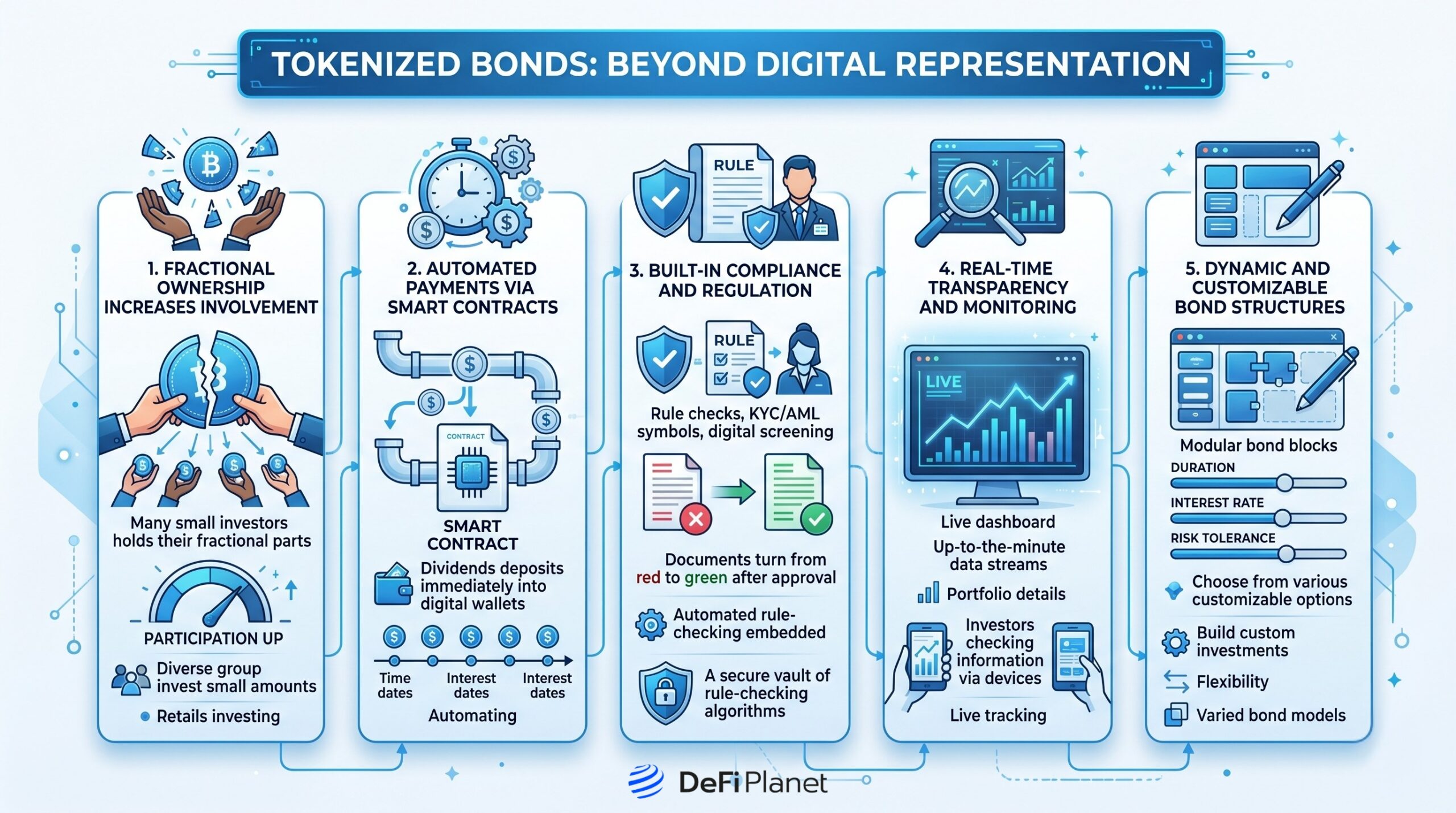
Fractional ownership increases involvement
In traditional bond dealings in the U.S., the minimum required investment can vary depending on the type of bond. The general minimum requirement is $1,000 per bond for corporations and $5,000 for municipalities. The amount is substantial, which may prevent many individuals from participating.
However, when bonds are tokenized, they can be divided into smaller portions, and the investors may purchase the bonds in their fractional form. This creates a way for individuals to invest in bonds by overcoming the initial obstacle.
Automated payments via smart contracts
When bonds are tokenized, the coupon payments and final principal repayments can be automated through smart contracts. Payment processes can be carried out via smart contracts using predefined rules without involving many intermediary entities.
Built-in compliance and regulation
Digital securities like tokenized bonds can comply with regulatory guidelines. These securities can set restrictions on investors based on their geographic location or type, and record investor ownership. As a result, it becomes more convenient for security issuers to comply with international regulations even when they use the blockchain network.
Real-time transparency and monitoring
Since these bonds are blockchain-based, all transactions are recorded and can be validated. Investors are able to monitor their holdings, payments, and transfers in real-time, which improves transparency compared to the current bond market system. This builds trust and makes the system more reliable.
Dynamic and customizable bond structures
The tokenization of assets makes it possible for bonds to be more flexible in nature. It is possible for the bond issuers to create bonds tied to specific objectives.
For example, the interest payments on the bonds can depend on how well the company performed in terms of its environmental goals or even its corporate targets.
RELATED: Top 10 Top Use Cases of Asset Tokenization
Real-World Use Cases That Signal Market Transformation
Tokenized bonds are already being used across different sectors, showing how blockchain is moving from experimentation to real financial adoption.
Corporate bonds: European Investment Bank (EIB)
The EIB has issued blockchain-based bonds to improve transparency and efficiency in capital markets. These tokenized bonds allow investors to track issuance and settlement more clearly, while supporting green and sustainable financing initiatives.
Vice President Mourinho Félix noted that:
“These digital bonds will play a role in giving the Bank a quicker and more streamlined access to alternative sources of finance to boost finance for projects across the globe.”
Private credit: Centrifuge
Centrifuge is bringing private credit on-chain by allowing businesses to tokenize real-world assets and access funding directly from investors. Through fractionalized lending pools, investors can gain exposure to SME debt markets that were previously limited to institutions.
Sovereign & institutional: World Bank (Bond-i)
The World Bank launched Bond-i, one of the first fully blockchain-managed bonds, demonstrating how tokenization can streamline issuance and reduce operational friction. The bond was created, allocated, and managed using blockchain technology, proving that large-scale, institutional-grade debt can operate efficiently on-chain.
Arunma Oteh, World Bank Treasurer, said:
“I am delighted that this pioneer bond transaction using the distributed ledger technology, bond-i, was extremely well received by investors.”
Sovereign green bonds: Hong Kong monetary authority
The Hong Kong Monetary Authority has issued tokenized green bonds as part of its push toward digital finance and sustainability. These bonds combine environmental funding goals with blockchain-based transparency, allowing investors to track both financial performance and environmental impact more effectively.
Mr Eddie Yue, the Chief Executive of the Hong Kong Monetary Authority, said,
“With each issuance of the HKSAR Government’s digital bonds since 2023, we have sought to further scale the market and explore new innovations, to reinforce the vision for Hong Kong to become a global hub for digital assets.”
Market Impact: How Tokenization Reshapes Finance
Tokenized bonds are changing how bonds are traded, accessed, and trusted across the entire financial system.
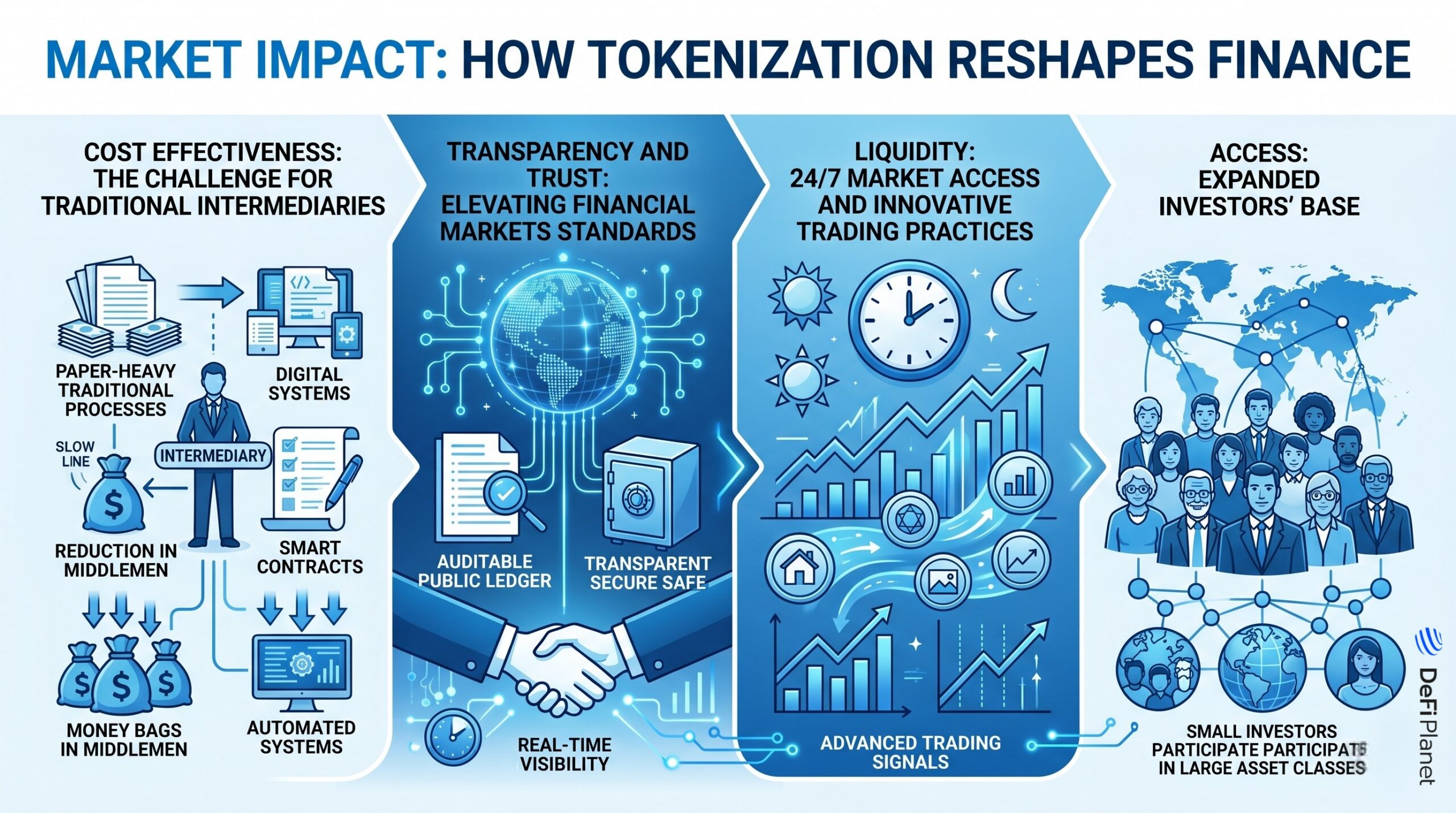
Cost effectiveness: the challenge for traditional intermediaries
As blockchain simplifies the process of issuance and settlement of trades, the role of the traditional intermediaries might start to change. Cost savings and efficiency might force traditional intermediaries like banks, brokerage firms, and clearing firms to transform their practices.
Transparency and trust: elevating financial markets standards
The transparency provided by tokenized bonds will make financial market standards even higher. As investors get used to transparent information, the traditional system that lacks transparency will need to adapt to the new situation.
Liquidity: 24/7 market access and innovative trading practices
The concept of tokenization will introduce constant trading along with lower position sizes, resulting in an increase in trading volume. This can help bridge the liquidity disparity between bonds and stocks while at the same time introducing new pricing structures for different regions and platforms.
Liquidity can make trading for investors more convenient, allowing them to start and end their transactions without experiencing the same challenges normally posed by bond trading.
Access: expanded investors’ base
Tokenization allows bonds to reach a wider investor base that includes not only retail traders but also foreign investors, who previously could not invest in bonds. The effect of this may be a decreased reliance on a handful of large banks.
RELATED: How Much Capital Can RWA Tokenization Really Funnel Into Crypto?
Challenges and Friction Points
While tokenized bonds have the potential to transform finance, their adoption faces real obstacles:
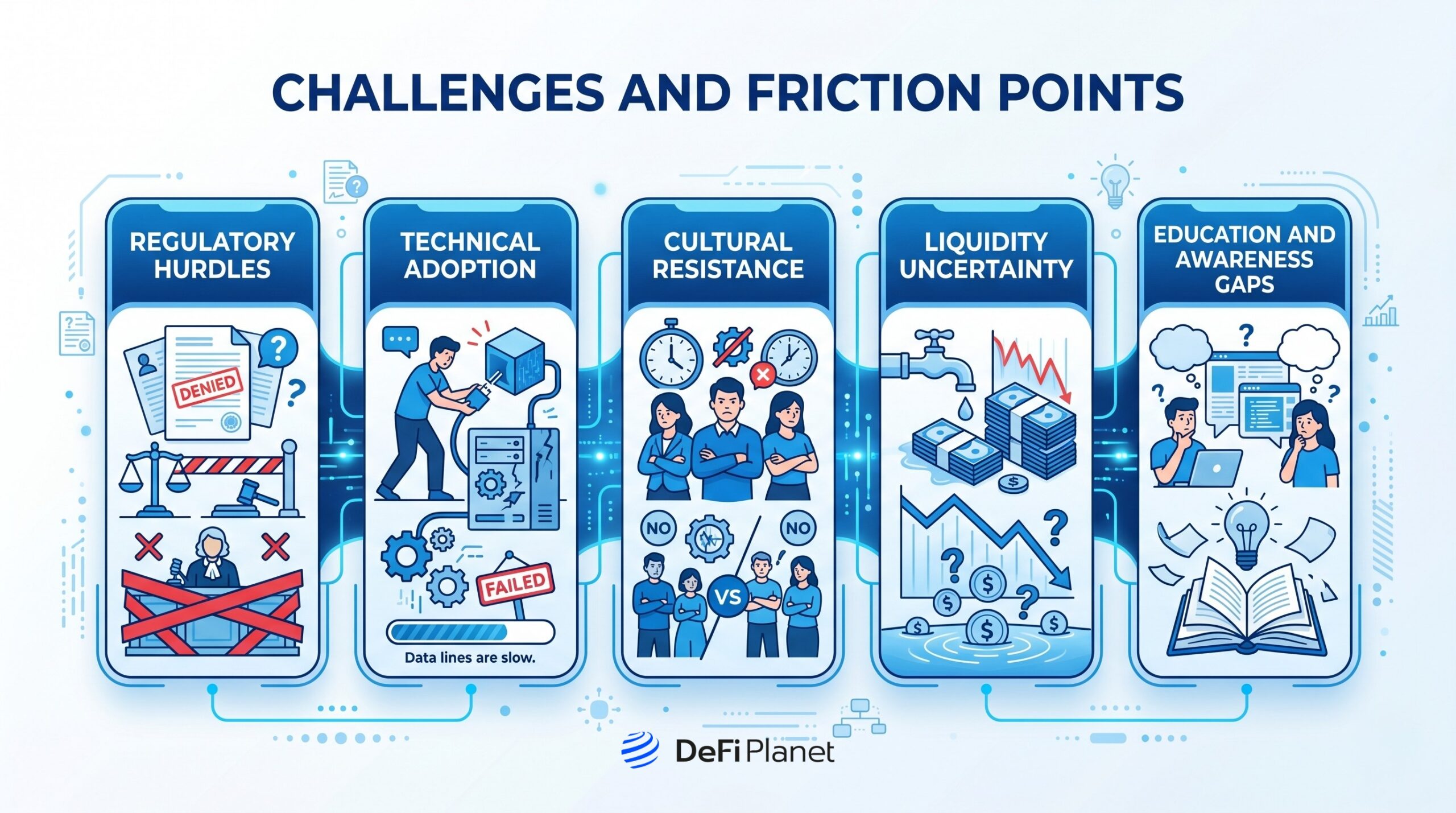
Regulatory hurdles
Every country has its own rules about bonds, securities, and investor protections. This makes it tricky for tokenized bonds to operate globally. Platforms must spend time and money to comply with these rules, or risk fines, legal action, or losing investor trust. Until regulations become clearer and more unified, adoption will move slowly.
Technical adoption
Blockchain technology is still evolving. Tokenized bonds rely on smart contracts and digital ledgers, but these can fail or be hacked. Different blockchains also don’t always work well together, making it hard for systems to communicate. If investors can’t trust the technology to be reliable, they may avoid using tokenized bonds.
Cultural resistance
Many banks, fund managers, and institutional investors are used to traditional bonds. They may see tokenized bonds as risky or unnecessary. Changing these habits takes time, even if tokenized bonds are cheaper, faster, or more transparent.
Liquidity uncertainty
Traditional bonds can be sold in large, active markets. Tokenized bonds are new, and secondary markets are still limited. If investors worry they won’t be able to sell quickly or at fair prices, they might hold back, slowing adoption.
Education and awareness gaps
Many investors, especially smaller ones, don’t fully understand tokenized bonds or how to buy them safely. Without clear information, tutorials, and support, people may hesitate, leaving adoption stuck among early tech-savvy users.
The Future: Tokenized Bonds as the Backbone of On-Chain Finance
Tokenized bonds could become a key part of the next wave of finance, linking traditional debt markets with DeFi. Picture bonds that can be used right away as collateral, moved easily between digital wallets, or owned in small pieces by investors worldwide. This could make capital more flexible and open than ever.
If adoption is slow, tokenized bonds would work alongside current markets, slowly making things smoother, cheaper, and clearer without replacing traditional systems.
In an aggressive adoption scenario, tokenization could become the norm, allowing bonds to be issued, traded, and settled in real time. This could turn capital markets into a fully digital system with more liquidity and wider investment opportunities.
In the long run, widespread adoption could open debt markets to more people, letting smaller and global investors diversify their portfolios. It could also create new strategies, like owning fractions of bonds or using programmable bonds that adjust payouts on their own.
By making capital move faster and more transparently, tokenized bonds could change how monetary policy affects markets and might reshape parts of the global financial system.
A New Era for Bonds
Tokenized bonds are changing how debt markets work. They make bond markets quicker, cheaper, and more transparent. Issuers get wider access to capital, and investors find new ways to join markets that used to be closed off and hard to understand.
Looking ahead, the on-chain future of bonds promises to blend traditional finance with the digital age, unlocking opportunities for innovation, efficiency, and inclusion. As bonds go on-chain, we enter a new frontier for capital, where markets are more accessible, dynamic, empowering investors, and reshaping how the global financial system functions.
Disclaimer: This article is intended solely for informational purposes and should not be considered trading or investment advice. Nothing herein should be construed as financial, legal, or tax advice. Trading or investing in cryptocurrencies carries a considerable risk of financial loss. Always conduct due diligence.
Enjoyed this? Bookmark DeFi Planet, explore related topics, and follow us on Twitter, LinkedIn, Facebook, Instagram, Threads, and CoinMarketCap Community for seamless access to high-quality industry insights.
Take control of your crypto portfolio with DEFI PLANET PRO, DeFi Planet’s suite of analytics tools.”